
Hotels and accommodation are an essential part of the travel and hospitality industry. They provide temporary places to stay for people travelling for holidays, business, education, medical appointments, family visits, and other purposes. Accommodation ranges from traditional hotels and resorts to serviced apartments, hostels, guesthouses, and short-term rental properties.
The hospitality industry developed alongside trade routes, transportation networks, and tourism. Early inns and guesthouses provided travellers with shelter and meals, while the growth of railways, road transport, and commercial aviation increased demand for organized lodging. Modern accommodation now includes properties designed for different budgets, travel durations, privacy requirements, and visitor preferences.
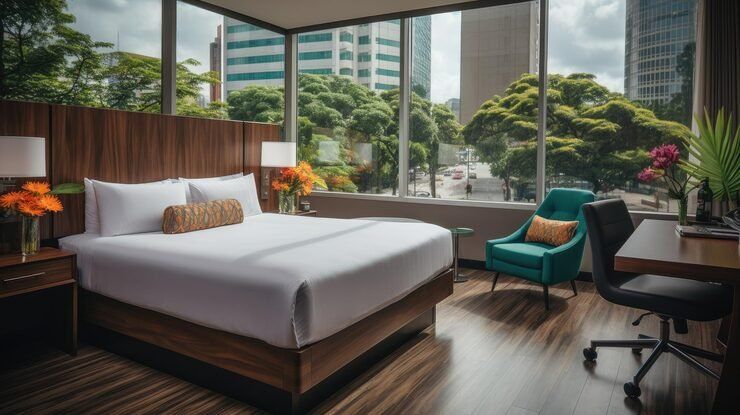
Hotels generally provide furnished rooms alongside facilities such as reception areas, housekeeping, restaurants, meeting spaces, and recreation areas. The exact facilities depend on the property. Other accommodation types may provide shared kitchens, independent living spaces, or limited on-site assistance.
How the accommodation industry operates
The accommodation sector brings together property owners, hospitality operators, reservation platforms, travel agencies, and guests. Hotels may be independently operated or managed under a hospitality brand. Some properties are owned by the operating company, while others are owned by separate investors or property owners under management or franchise arrangements.
Reservations can be made directly with a property, through an online travel agency, through a corporate travel department, or with the help of a traditional travel agent. Booking systems coordinate room availability, reservation details, guest information, payment arrangements, and check-in procedures.
The industry also relies on several operational functions:
Front desk operations: Handle arrivals, departures, guest enquiries, and room assignments.
Housekeeping: Maintains room cleanliness and prepares accommodation for incoming guests.
Revenue management: Adjusts room availability and rates according to demand, seasonality, and other business conditions.
Property management systems: Organize reservations, room status, guest records, and daily hotel operations.
Distribution systems: Make room availability and rates accessible through different booking channels.
These functions help accommodation providers manage guest stays while coordinating staffing, facilities, and daily operations.
Main Types of Hotels and Accommodation
Accommodation options differ in their facilities, layout, location, length of stay, and level of independence. Understanding these categories helps travellers compare properties according to their particular needs.
Hotels and resorts
Business hotels typically serve corporate travellers and may include meeting rooms, workspaces, reliable internet access, and convenient transport connections.
Resort hotels focus on leisure stays and may provide swimming pools, recreational facilities, restaurants, wellness areas, and organized activities. They are often located near beaches, mountains, or other visitor destinations.
Boutique hotels generally have a smaller or more individually designed setting. Their architecture, interiors, and guest experience may reflect the property's location or a particular design concept.
Luxury hotels provide upscale accommodation with features that may include larger rooms, multiple dining venues, concierge assistance, and personalized guest arrangements. Facilities differ by property and location.
Airport hotels are positioned near airports and serve passengers with early departures, late arrivals, or short stopovers.
Alternative accommodation options
Serviced apartments combine residential-style living spaces with some hotel-like facilities. They may include kitchens, separate living areas, and housekeeping arrangements, making them suitable for longer stays.
Hostels commonly provide shared dormitory rooms, although private rooms may also be available. Shared kitchens and communal areas are common features.
Guesthouses and bed-and-breakfast properties are usually smaller establishments that may provide a more residential setting. Breakfast arrangements vary.
Vacation rentals include houses, apartments, cottages, and other privately rented properties used for temporary stays. Rules governing their operation vary by destination.
Capsule hotels provide compact, individual sleeping spaces, often arranged in shared facilities. They are designed to use space efficiently and are found in several urban travel markets.
Extended-stay accommodation is intended for guests staying for longer periods. Properties may provide kitchen facilities, laundry areas, and arrangements suited to repeated or prolonged visits.
Comparing accommodation types
Accommodation type | Typical feature | Common travel purpose |
|---|---|---|
Business hotel | Work-oriented facilities | Corporate travel |
Resort | Leisure and recreation facilities | Holidays |
Boutique hotel | Individual design or smaller setting | City breaks and leisure |
Serviced apartment | Residential-style space | Longer stays |
Hostel | Shared accommodation options | Budget and social travel |
Guesthouse | Smaller lodging environment | Local or regional trips |
Vacation rental | Private residential space | Family and group travel |
Capsule hotel | Compact sleeping unit | Short urban stays |
Extended-stay property | Facilities for longer visits | Relocation and prolonged travel |
These categories can overlap. A single property may combine features from several accommodation types.
Booking Technologies and Digital Hospitality Systems
Technology has changed how travellers discover accommodation, compare options, make reservations, and manage their stays. Digital systems also help hospitality operators coordinate room availability, guest communications, payments, housekeeping, and property performance.
Online hotel booking platforms
Online travel agencies and accommodation marketplaces allow users to compare properties using location, room type, guest ratings, amenities, cancellation conditions, and displayed rates. Some platforms focus on hotels, while others include apartments, hostels, vacation rentals, and other lodging categories.
Direct hotel reservation systems allow guests to book through a property's own digital channels. Global hospitality groups may also operate loyalty programmes and centralized reservation systems that connect multiple properties under the same brand family.
When comparing reservations, travellers should examine the full booking conditions rather than relying only on the initial displayed rate. Taxes, additional fees, meal arrangements, deposits, cancellation deadlines, and refund conditions may affect the final amount payable.
Property management systems
A property management system (PMS) is software used to coordinate day-to-day accommodation operations. Depending on its capabilities, it can manage room assignments, reservation records, check-in and check-out, housekeeping status, billing, and guest information.
Some systems connect with central reservation platforms, online travel agencies, electronic door locks, and accounting applications. Integrations can reduce repetitive data entry, although compatibility and data accuracy remain important.
Modern technologies in hospitality
Several technologies are becoming more common across the accommodation sector:
Mobile check-in: Allows guests to complete some arrival procedures using a smartphone.
Digital room access: Uses electronic cards, mobile credentials, or other controlled access methods.
Automated guest communication: Sends reservation confirmations, arrival instructions, and stay-related updates.
Artificial intelligence: Supports customer enquiries, information retrieval, demand analysis, and certain administrative tasks.
Smart room controls: Allow adjustment of lighting, temperature, and selected room functions.
Revenue management software: Helps analyse demand patterns, booking pace, room availability, and rate performance.
Technology adoption varies between properties. Digital systems can improve convenience and coordination, but they also create responsibilities involving personal data, cybersecurity, accessibility, and the availability of alternatives for guests who cannot use digital tools.
Recent Developments in Hotels and Accommodation
From 2024 through 2026, the hospitality industry has continued to adapt to changing travel patterns, digital booking habits, sustainability concerns, and evolving guest expectations. Developments differ by region, property category, and local tourism conditions.
Artificial intelligence and personalized booking
AI-based tools are increasingly being used to answer routine enquiries, summarize accommodation information, support multilingual communication, and assist with demand forecasting. Some systems help travellers filter options or organize trip details according to their stated preferences.
Personalization may also involve presenting room recommendations, loyalty benefits, or relevant property information. These applications depend on the quality of available data and the way systems are configured. Automated information can be incomplete or inaccurate, so important booking terms should be verified.
Flexible stays and changing accommodation preferences
Accommodation providers continue to serve a mixture of short leisure trips, business travel, extended stays, and remote-working arrangements. This has maintained interest in properties with kitchen facilities, laundry access, workspaces, and flexible room layouts.
Alternative lodging has also become an important part of the wider accommodation market. However, short-term rental rules, neighbourhood restrictions, and registration requirements differ substantially across destinations.
Sustainability and resource management
Hotels are increasingly examining energy consumption, water use, food waste, laundry practices, and purchasing decisions. Common measures include efficient lighting, improved heating and cooling controls, water-saving fixtures, and systems for monitoring resource use.
Some properties also participate in environmental certification programmes. The scope of these programmes varies, and environmental claims should be assessed against the actual criteria and evidence provided.
Contactless operations and guest safety
Electronic payments, digital registration, mobile room access, and online guest communication remain part of hospitality operations. These technologies can reduce some administrative steps, but physical reception and staff assistance continue to be important in many properties.
Accommodation providers must also manage fire safety, emergency procedures, building maintenance, access control, and the protection of guest information. Digital convenience does not replace these operational responsibilities.
Laws, Regulations, and Guest Protection
Hotels and accommodation providers operate under legal requirements that vary by country, state, city, and property category. Regulations may cover business registration, building safety, fire protection, sanitation, consumer rights, taxation, accessibility, employment, and the handling of personal information.
Accommodation regulations in India
In India, accommodation businesses may need to comply with applicable municipal permissions, local trade requirements, building and fire safety rules, tax obligations, and state-specific tourism regulations. Requirements depend on the property's location, operating model, size, and facilities.
Hotels that collect guest identification information must also consider applicable privacy and data-protection requirements. The Digital Personal Data Protection Act, 2023, and relevant implementing rules are important parts of India's evolving personal-data framework. Their application depends on the provisions in force and the circumstances of the data processing.
Properties serving international visitors may have additional reporting obligations under applicable immigration and registration rules. Operators must verify the requirements relevant to their establishment rather than assuming that one national rule covers every accommodation type.
International considerations
Different countries apply different systems for licensing, tourist accommodation registration, taxation, and guest protection. For example, some destinations regulate short-term rentals through registration schemes, limits on rental periods, or restrictions tied to residential zoning.
Online booking platforms and accommodation providers may also have obligations relating to transparent pricing, cancellation policies, consumer rights, and the handling of complaints. Applicable requirements depend on the jurisdiction and the parties involved in the reservation.
Safety, accessibility, and privacy
Accommodation providers generally need to address several operational responsibilities:
Fire and emergency safety: Appropriate alarms, evacuation procedures, and required safety equipment.
Hygiene and sanitation: Cleaning practices and safe maintenance of guest facilities.
Accessibility: Applicable requirements for accessible entrances, rooms, facilities, and guest information.
Data protection: Appropriate handling of identification details, contact information, and payment-related records.
Consumer information: Clear communication of room conditions, booking terms, additional charges, and cancellation policies.
Travellers should also understand the specific rules attached to their reservation, including check-in requirements, occupancy limits, deposits, and cancellation conditions.
Tools and Resources for Travellers and Accommodation Providers
Digital tools help travellers compare accommodation and help operators manage property activities. The appropriate tools depend on whether the user is planning a trip, managing reservations, or overseeing a hospitality business.
Resources for travellers
Accommodation comparison tools: Help compare room categories, location, amenities, guest reviews, and reservation conditions.
Maps and travel-planning applications: Help estimate distances between accommodation, airports, transport stations, and visitor attractions.
Currency conversion tools: Assist international travellers in understanding displayed rates in their preferred currency. Exchange rates and payment-provider charges may differ.
Reservation management tools: Store booking confirmations, check-in instructions, travel dates, and cancellation deadlines.
Accessibility information: Helps travellers identify features such as step-free access, accessible bathrooms, lifts, and other relevant facilities. Details should be confirmed with the property when they are essential to the stay.
Resources for hospitality operators
Accommodation businesses use several types of operational software.
Property management systems: Coordinate reservations, room status, guest records, and daily operations.
Central reservation systems: Manage room availability and bookings across multiple properties or channels.
Channel managers: Synchronize room availability and rates across connected booking platforms.
Revenue management systems: Analyse booking trends and support room-rate decisions.
Customer relationship management systems: Organize guest communications and relevant customer records.
Energy monitoring systems: Track electricity, heating, cooling, and water consumption.
These tools may integrate with one another, but the extent of integration depends on the software and the property's technical setup. Data security, staff training, reliable records, and clear operating procedures remain important.
Frequently Asked Questions
What are the main types of hotel accommodation?
The main types include business hotels, resorts, boutique hotels, luxury hotels, airport hotels, serviced apartments, hostels, guesthouses, vacation rentals, and extended-stay properties. Each category serves different travel needs and offers different facilities.
How do online hotel booking systems work?
Online booking systems display available rooms, reservation conditions, rates, and property information. When a reservation is completed, the system records the booking and communicates relevant details to the traveller and, where integrated, the accommodation provider.
What is a hotel property management system?
A property management system is software that helps accommodation operators manage reservations, room assignments, housekeeping, check-in, billing, and other daily activities. Some systems also connect with booking platforms and electronic access systems.
What should travellers check before reserving accommodation?
Travellers should review the property's location, room facilities, total payable amount, taxes, cancellation conditions, check-in requirements, guest reviews, and any additional charges. Accessibility needs and transport arrangements may also influence the choice.
How is technology changing the hospitality industry?
Digital booking platforms, AI tools, mobile check-in, smart room controls, and automated reservation systems are changing how accommodation is managed. These technologies can simplify certain tasks, while privacy, cybersecurity, service quality, and human assistance remain important considerations.
Conclusion
Hotels and accommodation range from traditional hotels and resorts to serviced apartments, hostels, and short-term rentals. Booking technologies and hospitality management systems help coordinate reservations, guest information, room availability, and property operations. Current developments include AI-assisted planning, digital access, flexible accommodation formats, and resource monitoring. Regulations, safety requirements, and guest expectations vary across destinations and continue to shape the hospitality industry.