
Centrifugal pumps are mechanical devices that move liquids by converting rotational energy into fluid movement. They are widely used in water supply systems, industrial manufacturing, agriculture, chemical processing, power generation, and building operations. Their ability to move liquids continuously makes them an important part of many systems that require reliable fluid circulation.
A typical centrifugal pump consists of an impeller, casing, shaft, bearings, and a drive mechanism, usually an electric motor. When the impeller rotates, it transfers energy to the liquid. The pump casing then helps convert part of the liquid's velocity into pressure, allowing the liquid to move through connected pipes.
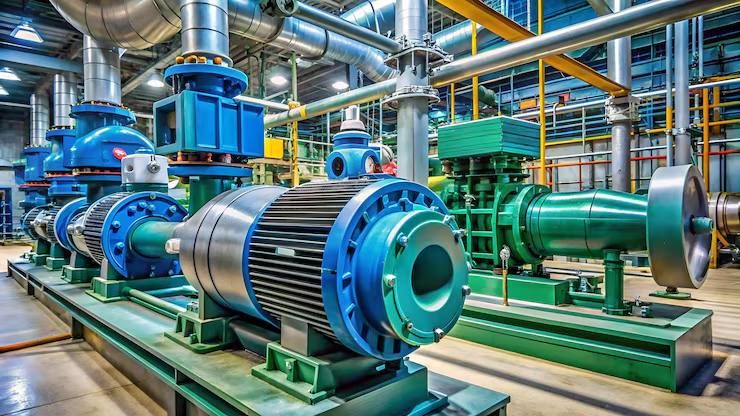
Centrifugal pumps belong to the broader category of dynamic pumps, which transfer energy to fluids through motion rather than by repeatedly trapping and displacing fixed volumes. Their operating characteristics depend on the impeller design, rotational speed, fluid properties, system resistance, and installation conditions.
How centrifugal pumps work
The pumping process begins when liquid enters the pump through the suction inlet. The rotating impeller accelerates the liquid outward, generally from the center toward the outer edge. The casing or diffuser guides the flow and helps convert velocity into pressure before the liquid exits through the discharge connection.
The pressure difference between the suction and discharge sides allows the pump to move liquid through the system. However, a centrifugal pump does not create liquid or eliminate the need for suitable suction conditions. Many designs require priming before operation unless they are configured for self-priming or submerged service.
Three important operating concepts help explain centrifugal pump performance:
Flow rate: The volume of liquid delivered over a given period.
Head: The energy transferred to the liquid expressed as the height of a liquid column. It is commonly measured in metres.
Efficiency: The relationship between useful hydraulic power delivered to the liquid and the mechanical or electrical power supplied to the pump system.
These characteristics are related. The actual flow and head depend on the pump's performance curve and the resistance of the connected piping system.
Main Types of Centrifugal Pumps
Centrifugal pumps are available in different configurations to suit variations in flow, pressure, installation space, liquid composition, and operating conditions. Selecting a suitable design requires an understanding of the process rather than relying on the pump's name alone.
Based on impeller and flow design
Radial-flow pumps: These pumps direct liquid outward from the impeller, producing a substantial increase in pressure. They are widely used for water circulation, industrial processing, and general liquid transfer.
Axial-flow pumps: These designs move liquid mainly parallel to the shaft. They are suited to high-flow applications where the required head is relatively low, such as drainage and water circulation.
Mixed-flow pumps: These combine radial and axial flow characteristics. They are used where the application requires a combination of comparatively high flow and moderate head.
Based on pump construction
End-suction pumps: The liquid enters through the end of the pump, while the discharge is generally positioned above the shaft. These pumps are common in building water systems, industrial utilities, and general process applications.
Split-case pumps: The casing separates into sections to allow access to internal components. They are often used for water supply, cooling systems, irrigation, and other applications involving substantial flow rates.
Multistage pumps: These contain multiple impellers arranged in series. Each stage adds energy to the liquid, allowing the pump to achieve a higher total head than a comparable single-stage design.
Vertical centrifugal pumps: These pumps use a vertical shaft arrangement and may be installed in tanks, sumps, or other locations where floor space or suction conditions influence equipment selection.
Submersible centrifugal pumps: These operate while submerged in the liquid being pumped. They are commonly used for wastewater handling, drainage, groundwater extraction, and certain industrial applications.
Comparing common centrifugal pump designs
Pump type | General operating characteristic | Typical applications |
|---|---|---|
Radial-flow | Moderate to high head, depending on design | Water circulation, process fluids |
Axial-flow | High flow with relatively low head | Drainage, irrigation, flood control |
Mixed-flow | Intermediate flow and head characteristics | Water transfer and circulation |
End-suction | Compact, general-purpose arrangement | Buildings and industrial utilities |
Split-case | Suitable for substantial flow rates | Water supply and cooling systems |
Multistage | High total head | Boilers, pressure boosting, water treatment |
Submersible | Operates within the pumped liquid | Drainage, wastewater, wells |
These descriptions are general. Actual performance depends on the individual pump's design and its operating point.
Importance of Centrifugal Pumps in Industry
Centrifugal pumps support many activities that depend on moving liquids safely and consistently. They help transport water, circulate cooling fluids, supply process liquids, and manage wastewater. A pump's performance can affect production continuity, energy consumption, equipment reliability, and the quality of industrial processes.
Major industrial applications
Centrifugal pumps are used across a range of industries because their designs can accommodate different flow requirements and operating conditions.
Water and wastewater treatment: Transfer raw water, circulate treated water, and move wastewater between treatment stages.
Oil and gas: Move compatible process liquids, cooling fluids, and certain petroleum products using pumps designed for the relevant fluid properties and operating conditions.
Chemical manufacturing: Transfer process liquids, circulate chemicals, and support cooling or heating operations. Materials must be selected to resist chemical attack.
Power generation: Circulate cooling water, supply water to appropriate systems, and support condensate handling.
Agriculture: Supply irrigation water, transfer water from storage tanks, and support drainage.
Food and beverage processing: Move water, liquid ingredients, and other compatible products using hygienic pump designs where required.
Pharmaceutical manufacturing: Transfer process liquids in systems designed to meet applicable cleanliness and contamination-control requirements.
Construction and mining: Remove accumulated water, manage drainage, and supply water for industrial operations.
Heating, ventilation, and air conditioning (HVAC): Circulate chilled water, hot water, and other compatible fluids through building systems.
The pump selected for one application may not be suitable for another. For example, a pump designed for clean water may experience rapid wear or blockage when handling abrasive slurry.
Factors affecting pump performance
Several conditions determine how efficiently and reliably a centrifugal pump operates.
System resistance: Pipe length, pipe diameter, fittings, valves, and elevation differences influence the pressure or head required to move liquid.
Liquid properties: Density, viscosity, temperature, and suspended particles affect hydraulic performance and material selection.
Suction conditions: Inadequate inlet pressure can cause cavitation, a phenomenon in which vapor bubbles form and collapse within the pump. This may lead to noise, vibration, surface damage, and reduced performance.
Operating point: A pump performs according to the interaction between its performance curve and the system curve. Operating too far from its intended range can increase vibration, energy use, and mechanical stress.
Maintenance condition: Worn bearings, damaged seals, impeller erosion, and deposits can affect operation and reliability.
Common challenges in centrifugal pump systems
Industrial operators may encounter leakage, excessive vibration, overheating, reduced flow, and unexpected shutdowns. These symptoms can arise from different causes, including poor alignment, restricted suction lines, incorrect operating conditions, worn components, or unsuitable materials.
Correct installation, appropriate pump sizing, routine inspection, and monitoring of operating conditions help identify problems. Maintenance intervals should reflect the equipment manufacturer's guidance, operating environment, and observed condition.
Recent Developments in Centrifugal Pump Technology
Developments from 2024 through 2026 have continued to focus on energy efficiency, digital monitoring, improved materials, and integration with automated industrial systems. These developments reflect a broader effort to manage fluid movement with greater operational visibility and more controlled energy use.
Energy-efficient pump systems
Pump manufacturers and industrial engineers continue to focus on hydraulic design, motor efficiency, and variable-speed control. Variable-frequency drives can adjust motor speed to match changing flow requirements, provided the pump and system are suitable for speed variation.
Correct system design is also important. Oversized pumps, unnecessary throttling, and excessive piping resistance can increase energy consumption. Evaluating the complete pumping system is therefore often more useful than examining pump efficiency in isolation.
Smart monitoring and predictive maintenance
Sensors can monitor vibration, bearing temperature, discharge pressure, flow rate, and motor power. These measurements help operators identify changes that may indicate mechanical wear, blockage, cavitation, or other developing problems.
Predictive maintenance software can analyze operating data and highlight unusual patterns. However, automated alerts require interpretation, and their reliability depends on sensor quality, suitable thresholds, and the availability of relevant operating history.
Materials and advanced manufacturing
Improvements in casting, machining, surface finishing, and manufacturing inspection support the production of pump components with carefully controlled dimensions. Depending on the application, manufacturers may use stainless steel, cast iron, duplex stainless steel, specialized alloys, or engineered polymers.
Material selection remains important when pumps handle corrosive chemicals, abrasive solids, elevated temperatures, or hygienic products. No single material is appropriate for every fluid or operating environment.
Digital integration and system control
Modern pumping installations may connect to programmable logic controllers, supervisory control and data acquisition (SCADA) systems, or building management systems. These systems can coordinate pump operation, monitor process conditions, and record operating data.
Digital integration does not remove the need for appropriate engineering design or physical inspection. Sensors and control systems must be configured to match the actual process and required safety measures.
Laws, Standards, and Safety Requirements
Centrifugal pump design, manufacturing, installation, and operation may be governed by technical standards and regulations relating to machinery safety, electrical systems, pressure equipment, environmental protection, and workplace health. Applicable requirements depend on the pump's purpose, operating conditions, installation location, and industry.
Standards used in pump engineering
Several standards provide guidance for centrifugal pump design and performance.
ISO 5199: Specifies technical requirements for certain centrifugal pumps used in general industrial applications.
ISO 2858: Covers principal dimensions and designated operating points for specified end-suction centrifugal pumps.
ISO 9906: Addresses hydraulic performance acceptance testing for rotodynamic pumps.
API 610: Covers centrifugal pumps used in petroleum, petrochemical, and natural gas industries.
IEC 60034: Covers relevant requirements for rotating electrical machines, including electric motors used in pumping systems.
These standards have different scopes and are not interchangeable. The appropriate edition and requirements depend on the application, project specification, and any applicable legal obligations.
Regulatory considerations in India
Indian facilities may need to comply with applicable factory safety requirements, electrical installation rules, environmental regulations, and relevant product standards. Pumps used in particular regulated systems may also be subject to additional inspection or technical requirements.
The Bureau of Indian Standards (BIS) publishes Indian Standards covering various engineering products and testing procedures. Whether a particular pump must comply with a specific Indian Standard or mandatory certification requirement depends on the product category and current regulations.
Installations handling hazardous liquids may require additional measures for leak prevention, electrical protection, emergency shutdown, and worker safety. Wastewater and industrial process systems may also need to meet relevant environmental permissions and discharge requirements.
Essential operating precautions
Pump systems should be installed and maintained according to the applicable technical documentation. Important precautions include confirming that the pump is suitable for the fluid, checking shaft alignment, ensuring adequate suction conditions, and protecting rotating components.
Electrical isolation should be established before maintenance work begins, and pressure or stored energy must be managed safely. Hazardous fluids may require specialized containment, ventilation, and protective equipment.
Tools and Resources for Centrifugal Pump Selection
Choosing a centrifugal pump requires information about the process, the liquid, and the connected piping system. Engineering calculations and equipment documentation help determine whether a proposed pump can meet the required operating conditions.
Common engineering tools
Pump performance curves: Show the relationship between flow rate, head, efficiency, and sometimes power consumption or net positive suction head requirements.
System curve calculations: Estimate the head required at different flow rates by considering static elevation and friction losses through the piping system.
Pump sizing software: Helps evaluate pump operating points, compare suitable configurations, and assess hydraulic performance using specified operating data.
Motor and energy calculations: Help estimate power requirements and evaluate the effects of motor efficiency and operating schedules.
Condition-monitoring instruments: Vibration meters, temperature sensors, pressure gauges, and flow meters provide information about equipment condition and system behavior.
Information needed for pump selection
Before selecting equipment, engineers typically establish the following:
Requirement | Information to determine |
|---|---|
Flow rate | Required liquid volume per unit of time |
Total head | Pressure and elevation requirements, including system losses |
Liquid properties | Density, viscosity, temperature, and chemical composition |
Suction conditions | Available inlet pressure and cavitation risk |
Materials | Compatibility with the liquid and operating environment |
Motor requirements | Power supply, operating speed, and control method |
Maintenance access | Space for inspection, component replacement, and servicing |
These details help ensure that the selected pump matches the intended duty. Final selection may require a more detailed hydraulic assessment and verification against manufacturer data.
Frequently Asked Questions
What is a centrifugal pump used for?
A centrifugal pump moves liquids by transferring rotational energy from an impeller to the fluid. It is used in water supply, industrial processing, irrigation, cooling systems, wastewater treatment, and many other applications.
What is the difference between single-stage and multistage centrifugal pumps?
A single-stage pump contains one impeller, while a multistage pump contains two or more impellers arranged in series. Multistage designs are commonly used when higher total head is required.
How do you choose a centrifugal pump for industrial applications?
Selection depends on the required flow rate, total head, liquid properties, suction conditions, material compatibility, energy requirements, and applicable technical standards. The pump's performance curve must match the intended operating conditions.
What causes centrifugal pump failure?
Common causes include cavitation, dry running, misalignment, bearing wear, seal leakage, corrosion, abrasive wear, and operation outside the intended performance range. Proper installation and condition monitoring help identify potential problems.
What is the role of variable-frequency drives in centrifugal pumps?
Variable-frequency drives adjust motor speed to suit changing process demands. When properly applied, they can reduce unnecessary energy consumption and help maintain the required flow or pressure.
Conclusion
Centrifugal pumps are essential equipment for transporting liquids across manufacturing, water management, energy, agriculture, and chemical processing. Their performance depends on pump design, fluid properties, system resistance, and correct installation. Developments in energy-efficient motors, variable-speed control, digital monitoring, and materials engineering continue to influence pump technology. Appropriate selection, safe operation, and regular condition assessment are important for maintaining reliable pumping systems.