Industrial Internet of Things (Industrial IoT or IIoT) is the use of connected sensors, machines, software, and communication networks to collect, exchange, and analyze information across industrial environments. Unlike consumer Internet of Things devices used in homes, Industrial IoT focuses on manufacturing, energy, transportation, logistics, mining, agriculture, and other industrial sectors where reliable data supports equipment monitoring, production management, and operational efficiency.
Industrial IoT combines connected manufacturing technologies with automation, cloud computing, artificial intelligence, edge computing, and industrial communication systems. These technologies enable machines and production equipment to exchange information in real time, creating smart factory systems that improve visibility into industrial operations. As Industry 4.0 continues to expand, Industrial IoT has become an important element of digital manufacturing and intelligent industrial infrastructure.
Context
What Is Industrial IoT?
Industrial IoT refers to a network of connected industrial devices that gather operational information and communicate with other systems through secure digital networks. Sensors installed on machinery collect information such as temperature, pressure, vibration, speed, energy consumption, and production status.
Instead of operating as isolated machines, connected equipment shares information with control systems, monitoring platforms, and data analysis software.
Typical Industrial IoT devices include:
- Industrial sensors
- Smart controllers
- PLCs
- Industrial gateways
- Machine vision systems
- Smart meters
- Robotics
- Edge computing devices
- Communication modules
Together, these devices create connected manufacturing environments capable of exchanging information continuously.
How Connected Manufacturing Technologies Work
Industrial IoT systems operate through several integrated stages.
The process generally includes:
- Sensors collect operational information.
- Industrial controllers process local data.
- Communication networks transfer information.
- Edge devices perform rapid analysis.
- Cloud platforms store and organize data.
- Analytics software generates operational insights.
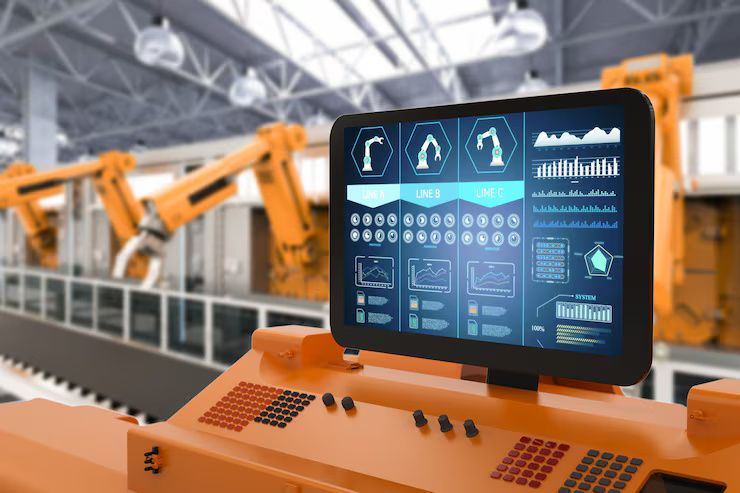
- Operators monitor equipment through dashboards.
This continuous flow of information allows organizations to observe production processes more effectively.
Core Components of Smart Factory Systems
Modern smart factory systems combine multiple digital technologies.
| Component | Primary Function | Industrial Application |
|---|---|---|
| Industrial Sensors | Measure operating conditions | Equipment monitoring |
| PLCs | Control machinery | Automation systems |
| Industrial Gateways | Transfer machine data | Network communication |
| Edge Computing Devices | Process local information | Real-time decision support |
| Cloud Platforms | Store operational information | Centralized monitoring |
| Analytics Software | Evaluate production data | Process optimization |
Each component contributes to an integrated manufacturing environment.
Industrial Communication Technologies
Industrial IoT relies on communication protocols that allow machines to exchange information securely and efficiently.
Common communication technologies include:
- Ethernet-based industrial networks
- Wireless industrial communication
- OPC UA
- Modbus
- PROFINET
- EtherNet/IP
The selected communication method depends on production requirements and existing automation infrastructure.
Importance
Why Industrial IoT Matters
Manufacturing facilities operate thousands of machines, sensors, and production assets. Without connected systems, monitoring equipment individually becomes increasingly difficult.
Industrial IoT improves visibility by collecting operational information from multiple machines and presenting it through centralized monitoring platforms.
Supporting Smart Manufacturing
Connected manufacturing technologies help organizations monitor production continuously.
Typical applications include:
- Equipment status monitoring
- Production tracking
- Energy management
- Inventory visibility
- Machine utilization analysis
- Quality monitoring
- Environmental monitoring
These functions support informed operational decisions.
Applications Across Industries
Industrial IoT technologies are used in many sectors.
Manufacturing: Production equipment shares information with automation systems for monitoring, process control, and maintenance planning.
Energy: Power generation facilities monitor turbines, transformers, electrical systems, and distribution equipment.
Oil and Gas: Pipelines, pumps, compressors, and storage facilities use connected sensors for operational monitoring.
Agriculture: Smart farming equipment monitors irrigation systems, machinery, weather conditions, and crop environments.
Transportation: Railway systems, logistics operations, and fleet management platforms use connected devices to observe equipment performance.
Benefits of Connected Manufacturing Technologies
Industrial IoT supports several operational improvements.
These include:
- Continuous equipment monitoring
- Improved production visibility
- Faster operational reporting
- Better maintenance planning
- Integration with automation systems
- Centralized information management
Actual outcomes depend on system design, implementation, and operational practices.
Recent Updates
Artificial Intelligence Integration
Between 2024 and 2026, Industrial IoT platforms have increasingly integrated artificial intelligence for operational analysis. AI algorithms evaluate equipment information, recognize patterns, identify unusual operating conditions, and support predictive maintenance.
Human operators continue overseeing industrial processes and maintenance decisions.
Expansion of Edge Computing
Edge computing has become increasingly important in Industrial IoT because it allows information to be processed near production equipment instead of relying entirely on cloud infrastructure.
This approach reduces communication delays and supports faster operational responses.
Digital Twin Technologies
Many industrial organizations now combine Industrial IoT with digital twin technologies. Digital twins create virtual representations of physical equipment using real-time operational information collected from connected sensors.
These digital models support equipment monitoring, production analysis, and maintenance planning.
Growth of Industrial Cybersecurity
As industrial connectivity expands, organizations continue strengthening cybersecurity through network segmentation, identity management, encrypted communication, and continuous monitoring.
Cybersecurity has become an important part of Industrial IoT implementation.
Sustainable Manufacturing
Connected manufacturing technologies increasingly support sustainability initiatives by monitoring energy consumption, equipment utilization, resource efficiency, and environmental conditions across production facilities.
Laws or Policies
Data Protection Regulations
Industrial IoT systems may collect operational and organizational information. Companies generally follow applicable data protection regulations governing information storage, processing, and access.
Requirements vary depending on country and industry.
Cybersecurity Frameworks
Many governments and industrial organizations have developed cybersecurity guidelines for connected industrial systems. These frameworks address network protection, access management, risk assessment, and incident response.
Organizations commonly adapt these frameworks according to operational requirements.
Industrial Safety Standards
Industrial IoT equipment operates alongside machinery that follows workplace safety regulations covering machine operation, electrical equipment, automation systems, and employee protection.
Safe implementation includes documented operating procedures and regular system maintenance.
Technical Standards
Industrial IoT technologies often follow internationally recognized standards covering communication protocols, interoperability, equipment performance, and industrial networking to improve compatibility between connected devices.
Tools and Resources
Industrial IoT Platforms
Industrial IoT platforms collect operational information, monitor equipment status, organize production data, and display dashboards for manufacturing environments.
Typical platform functions include:
- Device management
- Data visualization
- Equipment monitoring
- Alarm management
- Historical reporting
SCADA Systems
Supervisory Control and Data Acquisition (SCADA) systems monitor industrial equipment and allow operators to observe production activities from centralized control rooms.
Manufacturing Execution Systems
Manufacturing Execution Systems (MES) coordinate production activities by integrating operational information from Industrial IoT devices with manufacturing workflows.
Industrial Analytics Software
Analytics platforms evaluate information collected from connected equipment, helping engineers understand production performance, maintenance requirements, and operational trends.
Educational Resources
People interested in Industrial IoT and smart manufacturing technologies often learn from:
- Industrial automation organizations
- Manufacturing engineering publications
- International standards organizations
- Industrial cybersecurity resources
- Engineering universities
- Technical training materials
These resources explain connected manufacturing technologies, industrial networking, automation systems, and digital factory concepts.
FAQs
What is Industrial IoT?
Industrial IoT is a network of connected industrial devices that collect, exchange, and analyze operational information to support manufacturing, automation, and equipment monitoring.
How do connected manufacturing technologies work?
Connected manufacturing technologies use sensors, industrial controllers, communication networks, cloud platforms, and analytics software to monitor and manage industrial operations.
What are smart factory systems?
Smart factory systems combine Industrial IoT, automation, artificial intelligence, cloud computing, and digital communication technologies to create connected manufacturing environments.
Where is Industrial IoT used?
Industrial IoT is widely used in manufacturing, energy, transportation, agriculture, mining, logistics, oil and gas, healthcare equipment, and process industries.
Why is Industrial IoT important for industrial applications?
Industrial IoT improves equipment monitoring, production visibility, maintenance planning, and information sharing while supporting connected manufacturing technologies and smart factory systems.
Conclusion
Industrial IoT has become a key technology for connected manufacturing by linking machines, sensors, automation systems, and digital platforms into unified industrial networks. Through smart factory systems, organizations can monitor equipment, analyze production information, and improve operational visibility across complex manufacturing environments. As artificial intelligence, edge computing, and digital connectivity continue to advance, Industrial IoT will remain an important part of modern industrial automation and digital transformation.