
Picture a long metal trough that gently shakes and keeps pushing dry powders, grains, or small parts forward without any belts or rollers. That simple idea sits at the heart of vibrating conveyors. These machines show up in factories, processing plants, and packaging lines where steady, controlled movement of bulk materials matters.
They do not rely on continuous belts that can stretch or tear. Instead, they use carefully timed vibration to make material hop, slide, or flow along a path. The result feels almost effortless once the settings match the product.
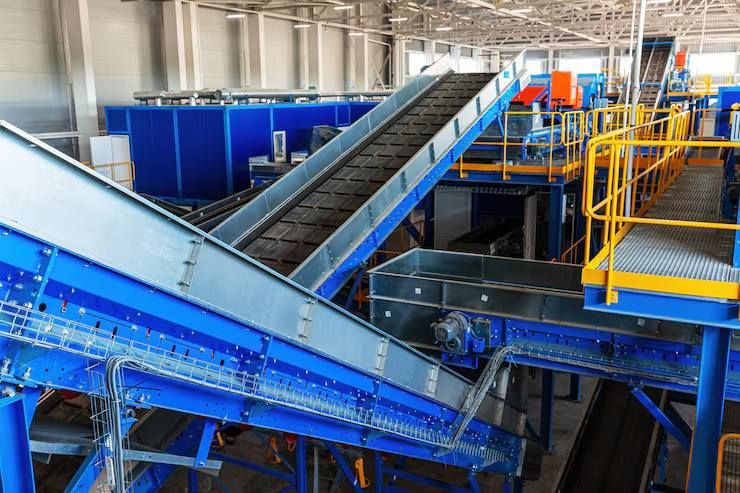
What Vibrating Conveyors Actually Are
A vibrating conveyor is a trough or pan mounted on springs or flexible supports. Electric motors or electromagnetic drives create rapid back-and-forth or circular motion. That motion transfers energy to the material inside the trough. Gravity and the angle of the trough then work together so the material travels in one direction.
Think of shaking a tablecloth to move crumbs toward the edge. The crumbs do not stick to the cloth; they keep advancing. Vibrating conveyors apply the same principle on an industrial scale, only with precise control over frequency, amplitude, and direction.
Most units handle dry or free-flowing products. Sticky or wet materials can still move, but the design often needs special coatings or steeper angles.
Core Parts You Will Notice
- A rigid trough or pan that carries the load
- Drive units that generate the vibration
- Isolation springs or isolators that keep the shaking from traveling into the floor
- Supports and frames that hold everything steady
These parts work together so the energy stays focused on the material rather than the building structure.
How Vibration Creates Forward Motion
The secret lies in the way the trough moves. Two common patterns appear again and again.
In the linear style, the trough travels forward and slightly upward, then returns more quickly. Material lifts and lands a short distance ahead with every cycle. Over thousands of cycles per minute, the product advances steadily.
In the circular or elliptical style, the path of each point on the trough forms a small oval. This pattern often suits denser or more abrasive materials because the motion reduces wear on the trough surface.
Frequency usually sits between 10 and 60 cycles per second. Amplitude stays small—often just a few millimeters—so the material never bounces out of control. Operators adjust both values until the product flows at the desired rate without packing or segregating.
A practical example helps. Imagine roasted coffee beans traveling from a roaster to a packaging line. Too much amplitude and the beans jump and break. Too little and they stall. Fine-tuning the vibration keeps the beans whole and moving at a steady pace.
Common Types of Vibrating Conveyors
Different layouts suit different plant layouts and product needs.
Horizontal Vibrating Conveyors
These stay level or nearly level. They work well when space is limited and material must travel long distances without changing height. Food processors often choose them for cereal flakes or spice blends because the gentle motion protects fragile pieces.
Inclined Vibrating Conveyors
A slight upward slope lets the machine both convey and elevate material. The extra height gain proves useful when the next process sits higher than the previous one. Mining operations use them to lift crushed ore short distances without adding a separate elevator.
Spiral Vibrating Conveyors
The trough winds upward in a helix. Material climbs while staying inside a compact footprint. These units shine in plants where floor space is expensive and vertical transport is needed.
Vibratory Feeders
Closely related, feeders meter material into another machine at a controlled rate. They often sit under hoppers and deliver a precise stream of powder or granules. While not pure conveyors, they share the same vibration technology and appear in the same production lines.
Real-World Places You Find Them
Walk through a modern grain mill and you will see vibrating conveyors carrying wheat from cleaning stations to grinding rollers. In a plastic recycling plant, flakes travel from the washer to the extruder on similar equipment. Pharmaceutical tablet presses rely on them to feed granules without damaging the particles.
Foundries use heavy-duty versions to move hot sand and castings. The vibration keeps the sand from sticking while the metal cools. Each setting demands different trough materials—stainless steel for food and medicine, abrasion-resistant alloys for minerals.
One everyday illustration is a snack-food factory. Seasoned chips leave the fryer and enter a long vibrating pan. The pan spreads the chips into a single layer so seasoning sticks evenly. At the same time the pan carries them toward the bagging machine. No belts touch the product, which reduces breakage and keeps the line cleaner.
Advantages That Keep Plants Choosing Them
Vibrating conveyors handle a wide range of particle sizes without the need for complicated adjustments. They tolerate dusty environments better than many belt systems because fewer moving parts sit exposed. Cleaning is often simpler—operators can open the trough and wipe it down between product changes.
Energy use stays modest once the machine reaches operating speed. The drives only need enough power to maintain the vibration, not to pull a long loaded belt. Noise levels remain manageable when isolation mounts are properly selected.
For abrasive materials, the absence of a continuous belt means less frequent replacement of wearing surfaces. The trough itself becomes the main wear item and can be lined or replaced in sections.
Points to Consider Before Selecting One
Match the trough material to the product. Stainless steel resists corrosion and meets hygiene standards. Mild steel works for many bulk solids when surface finish is less critical.
Check the drive type. Electromagnetic drives offer quick start-stop response and fine amplitude control. Eccentric-mass motors deliver strong forces for heavier loads and longer troughs.
Think about the surrounding structure. Vibration must stay isolated so nearby equipment and building floors remain calm. Proper spring selection and mounting details prevent unwanted transmission of energy.
Capacity calculations start with the bulk density of the material and the desired flow rate. A trough that is too narrow will limit throughput. One that is too wide may allow material to wander sideways instead of advancing.
Temperature also matters. Hot products expand the trough and change spring rates. Cold environments can stiffen isolators. Designers account for both extremes when the process temperature varies widely.
Keeping Performance Steady Over Time
Regular checks keep the machine reliable. Inspect the isolators for cracks or permanent set. Listen for changes in the sound of the drive—unusual noise often signals a loose mass or worn bearing.
Wipe the trough surfaces according to the product schedule. Residual material can alter the vibration characteristics and reduce capacity. Tighten fasteners after the first few days of operation, then at planned intervals.
When product characteristics change—moisture content rises or particle size shifts—revisit the amplitude and frequency settings. Small adjustments restore the original flow pattern without major mechanical work.
Looking Ahead at Design Improvements
Manufacturers continue refining drive electronics so operators can change vibration patterns from a control screen. Sensors now monitor amplitude in real time and automatically compensate for changes in load.
Trough linings last longer with advanced polymers and ceramics. These surfaces reduce friction and protect against abrasion while remaining easy to clean. Modular designs let plants expand or reconfigure lines with less downtime.
The core idea stays the same: controlled vibration moves material with minimal contact and high reliability. As plants seek quieter, cleaner, and more flexible handling methods, vibrating conveyors keep earning their place on the floor.
Whether the product is sugar crystals, metal chips, or plastic pellets, the same gentle shaking principle adapts to the task. Understanding the basics of motion, types, and practical choices helps anyone involved in material movement select and operate these machines with confidence.