
Gearbox manufacturing is a specialized branch of mechanical engineering centered on producing enclosed mechanical drive systems that transmit rotational power and alter speed and torque ratios between a driving source and a driven load. By enclosing rotating gears, shafts, and bearings within a rigid housing, gearboxes provide mechanical advantage, protect internal components from environmental contamination, and ensure consistent power transfer across heavy machinery and industrial equipment.
The functional foundation of any gearbox relies on precise meshing teeth that transfer mechanical energy while minimizing friction and vibrational energy loss. Understanding the manufacturing processes, gear types, material science, and global supply chains involved in gearbox production provides vital insight into how modern mechanical infrastructure operates.
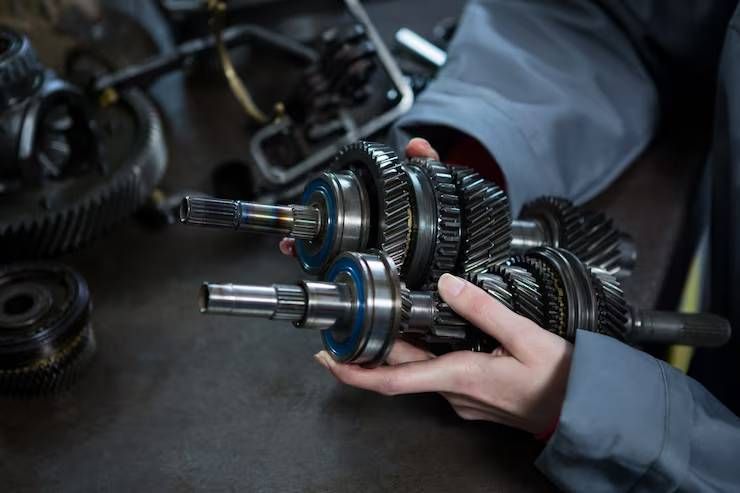
Industrial machinery, wind turbines, automotive drivetrains, and manufacturing assembly lines depend entirely on high-integrity gearboxes to maintain operational reliability under heavy continuous loads and fluctuating torque profiles.
Fundamentals of Gearbox Types and Mechanics
Primary Gearbox Design Categories
Gearboxes are engineered in diverse configurations tailored to specific speed reduction, torque amplification, and spatial constraints:
Spur Gearboxes: Feature straight-cut teeth parallel to the axis of rotation, offering simple mechanical design and high efficiency for basic speed reduction, though operating with higher noise levels at elevated speeds.
Helical Gearboxes: Utilize angled teeth that engage gradually, providing smooth, quiet operation and high load-carrying capacity suitable for heavy-duty industrial applications.
Bevel Gearboxes: Designed with cone-shaped gears that transfer power between intersecting shafts—typically at a 90-degree angle—enabling right-angle mechanical drive configurations.
Worm Gearboxes: Consist of a screw-like worm driving a gear wheel, providing high torque reduction ratios and inherent self-locking characteristics in a compact space.
Planetary Gearboxes: Comprise a central sun gear surrounded by orbiting planet gears enclosed within an outer ring gear, delivering exceptional torque density, high precision, and compact coaxial geometry.
Core Mechanical Principles
A gearbox operates on the fundamental principle of mechanical advantage. When a smaller driving gear transfers rotational force to a larger driven gear, output speed decreases while output torque increases proportionally based on the gear ratio. Precision engineering ensures that pitch circles, tooth profiles, and center distances maintain exact alignment to prevent premature tooth wear and destructive vibration.
| Gearbox Type | Tooth Geometry | Typical Torque Capacity | Primary Operational Advantage |
| Spur Gearbox | Straight parallel teeth | Moderate | Simple design and high mechanical efficiency |
| Helical Gearbox | Angled continuous teeth | High | Smooth, quiet operation under heavy loads |
| Bevel Gearbox | Angular cone-shaped teeth | Moderate to High | Enables 90-degree directional power transfer |
| Worm Gearbox | Threaded worm and wheel | High reduction ratio | High gear reduction and self-locking capability |
| Planetary Gearbox | Concentric sun and planet gears | Very High | Exceptional torque density and compact size |
Manufacturing Processes and Production Technologies
The Production Workflow from Forging to Assembly
Producing a high-reliability industrial gearbox requires a tightly controlled sequence of metallurgical, machining, and assembly operations:
Forging and Blank Preparation: Steel alloy billets—such as 20CrMnTi or 42CrMo—are heated to high temperatures and pressed into near-net shapes via closed-die forging, aligning internal steel grain flow along the contour of the future gear teeth to maximize fatigue resistance.
Rough and Finish Machining: Lathes and multi-axis CNC machining centers turn shaft journals, bore gear blanks, and mill structural housings to precise geometric tolerances.
Advanced Gear Cutting: Specialized cutting technologies—including gear hobbing, power skiving, and form milling—shape raw blanks into precise involute gear teeth with exacting module specifications.
Heat Treatment and Thermal Processing: Gears undergo carburizing, nitriding, or induction hardening to diffuse carbon or nitrogen into the surface layer, creating a wear-resistant exterior shell while preserving a tough, impact-absorbent core.
Housing Machining and Line Boring: Cast iron or welded steel gear housings undergo precision line boring to ensure bearing journals and shaft centerlines maintain exact parallelism and concentricity.
Assembly and Load Testing: Components are carefully assembled, sealed, and subjected to test bench run-in procedures to verify thermal stability, backlash tolerances, and noise vibration signatures.
Advanced Machining and Tooling Innovations
Modern production facilities utilize indexable carbide-insert hobs, high-speed power skiving machines, and coordinate measuring machines (CMM) to maintain sub-micron dimensional accuracy. Automated digital inspection systems scan tooth flanks for lead and profile deviations, ensuring compliance with international gear accuracy standards before final integration.
Importance in Industrial Applications and Infrastructure
Heavy Industry and Manufacturing
Industrial gearboxes serve as the backbone of heavy manufacturing plants, driving conveyor systems, rolling mills, cement kilns, and large mixing vessels. Reliable power transmission ensures continuous production runs, preventing costly unplaned stoppages on automated assembly lines.
Renewable Energy and Power Generation
The expansion of wind energy infrastructure relies on heavy-duty planetary-helical wind turbine gearboxes. These specialized units step up slow rotor revolutions per minute into high-speed rotation required by electrical generators, withstanding extreme aerodynamic wind shear and dynamic load reversals over decades of continuous operation.
Transportation, Marine, and Mining
Marine propulsion systems, railway traction drives, and massive mining excavators depend on robust multi-stage gearboxes capable of absorbing shock loads and high torque surges in harsh, remote environments. Proper lubrication and thermal management are vital in these sectors to prevent catastrophic mechanical failure.
Recent Trends and Innovations
E-Mobility and Compact Integration
The rapid growth of electric vehicles and automated guided vehicles has driven demand for ultra-compact, lightweight gearboxes with high power density. Manufacturers utilize specialized alloy steels and optimized tooth geometries to reduce physical envelope dimensions without sacrificing torque capacity.
Smart Condition Monitoring and Digital Twins
Modern industrial gearboxes increasingly incorporate embedded Internet of Things (IoT) sensors. Vibration monitors, oil quality analyzers, and thermal sensors track operating conditions in real time. Connected software platforms analyze telemetry data to predict component wear, schedule preventive maintenance, and prevent unexpected failures.
Standards, Governance, and Quality Control
International Engineering Standards
Global gearbox manufacturing operates under stringent engineering frameworks governed by recognized standards organizations:
American Gear Manufacturers Association (AGMA): Establishes design practices, rating standards, and tolerance classifications for industrial gear units across North America.
International Organization for Standardization (ISO): Defines global standards for gear geometry, load capacity calculations, and material quality specifications.
Quality Management Frameworks: Certified production facilities adhere to strict quality systems like ISO 9001 and IATF 16949, ensuring complete material traceability and batch verification.
Lubrication and Thermal Maintenance
Proper lubrication is essential for minimizing metal-to-metal contact, reducing operating temperatures, and flushing wear debris from meshing zones. Synthetic oils, forced-feed lubrication systems, and advanced filtration units extend operating intervals and maximize operational efficiency.
Frequently Asked Questions
What is the primary function of an industrial gearbox?
An industrial gearbox transfers rotational power from a motor to driven machinery while altering speed and torque ratios. It matches high-speed, low-torque motor output to the high-torque, low-speed requirements of heavy industrial equipment.
Why are forged steel blanks preferred over machined bar stock for gears?
Forging aligns the internal grain structure of the steel along the contour of the gear teeth, significantly increasing resistance to bending fatigue, shock loads, and mechanical stress at the tooth root compared to machined bar stock.
How does a planetary gearbox achieve higher torque density?
A planetary gearbox distributes transmitted load across multiple planet gears simultaneously rather than a single mesh point. This shared load path allows a compact physical footprint to handle significantly higher torque outputs than traditional parallel-shaft designs.
What role does heat treatment play in gear manufacturing?
Heat treatment processes like carburizing or induction hardening create a hard, wear-resistant outer surface on gear teeth while maintaining a tough, ductile internal core capable of absorbing high impact shock without fracturing.
How do modern industries monitor gearbox health during operation?
Operators use advanced condition monitoring tools, including real-time vibration sensors, thermal imaging, oil debris analysis, and automated telemetry systems, to detect early signs of bearing wear or gear mesh degradation before failure occurs.
Conclusion
Gearbox manufacturing is an intricate discipline combining advanced metallurgy, precision machining, and rigorous thermal processing to deliver reliable power transmission solutions. From compact planetary drives in automation equipment to massive multi-stage gearboxes in wind turbines and heavy manufacturing, these mechanical systems enable efficient energy transfer across global industries. Continuous innovations in smart sensor integration, material science, and automated manufacturing ensure that modern gearboxes continue to meet increasingly demanding performance standards.