Glass manufacturers produce a wide range of materials and finished products for construction, automotive, electronics, packaging, laboratory equipment, consumer products, and industrial applications. Modern glass manufacturing combines raw-material preparation, melting, forming, controlled cooling, surface processing, inspection, and automated production technologies.
Different manufacturing methods produce different glass characteristics, including transparency, strength, thermal resistance, chemical resistance, optical performance, and dimensional precision. The appropriate glass type and production method depend on the intended application.
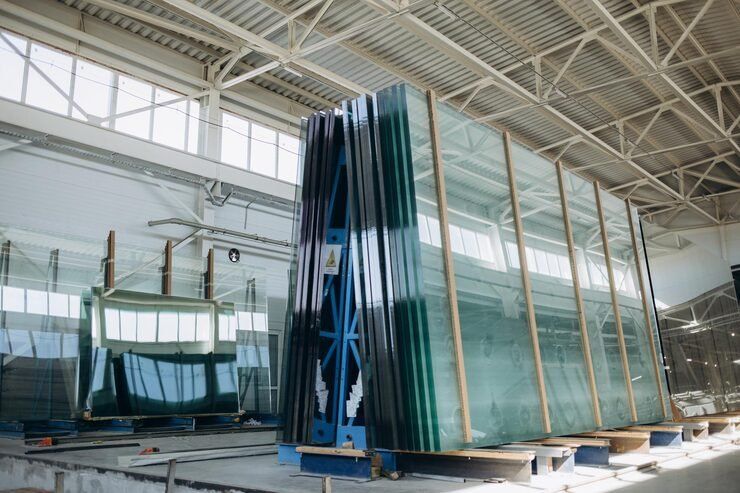
What Are Glass Manufacturers?
Glass manufacturers are companies that produce glass materials or finished glass products through controlled industrial processes.
Depending on their specialization, manufacturers may produce:
- Flat glass
- Container glass
- Automotive glass
- Architectural glass
- Tempered glass
- Laminated glass
- Insulating glass units
- Borosilicate glass
- Fused silica
- Specialty optical glass
- Laboratory glass
- Industrial glass
- Electronic glass
Some companies operate large integrated glass-production facilities, while others focus on processing, fabrication, coating, cutting, forming, or specialized glass products.
Why Glass Manufacturing Matters
Glass combines several properties that make it useful across many industries. It can provide transparency, chemical stability, electrical insulation, thermal resistance, and controlled optical characteristics.
Manufacturing technology determines many of these properties.
Key production considerations include:
- Chemical composition
- Melting temperature
- Forming method
- Cooling rate
- Thickness
- Surface treatment
- Heat treatment
- Coating technology
- Dimensional accuracy
- Optical quality
Manufacturers therefore select materials and production processes according to the final product requirements.
Major Types of Glass
Soda-Lime Glass
Soda-lime glass is widely used for architectural glazing, windows, containers, and many general-purpose applications.
It is commonly produced from silica sand, soda ash, limestone, and other carefully controlled raw materials.
Borosilicate Glass
Borosilicate glass contains significant amounts of boron oxide and is known for its thermal and chemical characteristics.
It is commonly used in laboratory equipment, pharmaceutical containers, lighting components, cookware, and industrial applications.
Tempered Glass
Tempered glass is heat-treated to increase mechanical strength and change its fracture characteristics.
It is commonly used in architectural glazing, doors, automotive applications, shower enclosures, and equipment panels.
Laminated Glass
Laminated glass consists of multiple glass layers bonded with an interlayer.
It can provide additional safety, sound-control, and security characteristics depending on the construction.
Low-E Glass
Low-emissivity glass incorporates a specialized coating that modifies infrared energy transmission.
It is widely used in energy-conscious building glazing systems.
Fused Silica
Fused silica has high purity and useful optical and thermal properties.
It is used in semiconductor processing, laboratory equipment, optical systems, and specialized industrial applications.
Glass Manufacturing Process
Although production varies according to glass type, industrial glass manufacturing generally follows several major stages.
1. Raw Material Preparation
Raw materials are selected, weighed, mixed, and prepared for melting.
Common ingredients can include:
- Silica sand
- Soda ash
- Limestone
- Dolomite
- Alumina-containing materials
- Boron compounds
- Recycled glass, known as cullet
The formulation depends on the desired glass composition.
2. Melting
The prepared batch is introduced into a furnace where it is heated to high temperatures.
The materials melt and react to form a homogeneous glass melt.
3. Refining
Gas bubbles and other imperfections can be reduced during the refining stage.
Temperature and residence time are controlled to achieve the required melt quality.
4. Forming
The molten glass is converted into the desired shape.
Different forming technologies are used for flat glass, bottles, fibers, tubes, sheets, and specialized components.
5. Annealing
Controlled cooling reduces internal stresses within the glass.
Annealing is particularly important because uncontrolled cooling can produce residual stresses and dimensional instability.
6. Finishing
The glass can undergo cutting, grinding, polishing, drilling, coating, laminating, tempering, or other secondary processes.
7. Inspection
Automated and manual inspection systems can evaluate dimensions, surface defects, optical properties, thickness, and other quality characteristics.
Major Glass Production Technologies
Float Glass Manufacturing
Float glass is one of the primary technologies for producing large flat glass sheets.
Molten glass flows onto a bath of molten tin, where it spreads into a controlled flat ribbon.
The process can produce large sheets with uniform thickness and high surface quality.
Container Glass Manufacturing
Container glass production uses specialized forming equipment to manufacture bottles, jars, and other containers.
The molten glass is divided into controlled portions called gobs, which are formed into containers using molds.
Press-and-Blow Forming
Press-and-blow processes use mechanical pressing and air pressure to form glass products.
This technology is used for various container and molded-glass applications.
Glass Fiber Production
Glass fibers are produced by drawing molten glass through small openings to create continuous or discontinuous fibers.
These fibers are used in insulation, composites, reinforcement, and specialty applications.
Glass Production Equipment
Modern glass factories can incorporate extensive automated equipment.
Common equipment includes:
- Batch mixing systems
- Glass melting furnaces
- Regenerative heating systems
- Forming machines
- Float baths
- Annealing lehrs
- Cutting systems
- Grinding equipment
- Polishing machines
- Coating systems
- Tempering furnaces
- Laminating lines
- Automated inspection systems
- Packaging systems
The equipment configuration depends heavily on the type of glass being produced.
Glass Manufacturing Technologies for Surface Processing
Glass manufacturers can apply additional processes after primary forming.
Tempering
Thermal tempering rapidly cools heated glass surfaces to create a controlled stress profile.
Laminating
Multiple glass layers can be bonded using polymer interlayers.
Coating
Coatings can modify optical, thermal, solar-control, electrical, or decorative characteristics.
Polishing
Precision polishing can improve surface quality and optical performance.
Edge Processing
Glass edges can be cut, ground, beveled, or polished according to product specifications.
Global Glass Manufacturers and Suppliers
The global glass industry includes companies specializing in flat glass, container glass, automotive glass, specialty glass, architectural products, and glass-processing technologies.
Examples of major companies active in glass manufacturing include:
- AGC
- Saint-Gobain
- NSG Group
- Guardian Glass
- SCHOTT
- Corning
- Nippon Electric Glass
- Vitro
- O-I Glass
- Fuyao Glass
Different companies operate across different glass segments. Some focus on architectural and flat glass, while others specialize in containers, specialty glass, optical materials, automotive products, or advanced technical glass.
When comparing manufacturers and suppliers, it is important to evaluate the specific glass composition, dimensions, processing capabilities, certifications, production capacity, quality requirements, and geographic logistics.
Glass Manufacturing Cost Factors
Glass manufacturing and processing costs can vary considerably according to product characteristics and production volume.
Important factors include:
- Glass composition
- Sheet or product dimensions
- Thickness
- Production volume
- Furnace technology
- Energy requirements
- Forming method
- Surface coatings
- Tempering
- Lamination
- Cutting and finishing
- Inspection requirements
- Packaging
- Transportation
Specialty glass generally requires more controlled production conditions than standard commodity glass because of its composition, purity, optical properties, or dimensional requirements.
Industrial Applications
Glass manufacturers supply products to a wide range of industries.
Construction
Architectural glass is used for windows, façades, doors, partitions, skylights, and interior applications.
Automotive
Automotive glass includes windshields, side windows, rear windows, sunroofs, and specialized glazing components.
Electronics
Specialty glass can be used in displays, semiconductor processing, optical components, sensors, and electronic devices.
Pharmaceutical and Laboratory
Borosilicate and other specialty glasses are used for laboratory equipment, pharmaceutical containers, vials, tubing, and process components.
Food and Beverage
Container glass is widely used for bottles and jars because of its chemical stability and packaging characteristics.
Energy
Glass can be used in solar technologies, lighting systems, insulation products, and specialized energy equipment.
Industrial Equipment
Specialty glass is used in viewing windows, sight glasses, furnace components, chemical equipment, and high-temperature applications.
How to Choose Glass Manufacturers
Selecting a glass manufacturer should begin with the technical requirements of the final product.
- Define the glass type and composition.
- Specify thickness, dimensions, and tolerances.
- Determine required optical and mechanical properties.
- Identify surface treatments or coatings.
- Review required forming and finishing processes.
- Check applicable quality standards and certifications.
- Evaluate production capacity and lead times.
- Review packaging and transportation requirements.
- Assess inspection and quality-control capabilities.
- Confirm technical support and customization capabilities.
For industrial applications, technical compatibility should generally be evaluated before comparing suppliers on commercial factors alone.
Frequently Asked Questions
What do glass manufacturers produce?
Glass manufacturers produce products such as flat glass, container glass, automotive glass, architectural glazing, tempered glass, laminated glass, borosilicate glass, optical glass, and other specialty products.
What is the main process used to manufacture glass?
Glass manufacturing generally involves raw-material preparation, melting, refining, forming, controlled cooling or annealing, finishing, and inspection.
What is float glass manufacturing?
Float glass manufacturing produces flat glass by allowing molten glass to flow over a bath of molten tin, creating a controlled flat ribbon with uniform surfaces and thickness.
Who are major glass manufacturers?
Major companies active in different segments of the global glass industry include AGC, Saint-Gobain, NSG Group, Guardian Glass, SCHOTT, Corning, Nippon Electric Glass, Vitro, O-I Glass, and Fuyao Glass.
What affects glass manufacturing costs?
Glass composition, thickness, dimensions, production volume, energy requirements, forming technology, coatings, tempering, lamination, finishing, inspection, packaging, and transportation can all influence the overall manufacturing cost.
Conclusion
Glass manufacturers use advanced melting, forming, annealing, processing, coating, inspection, and automation technologies to produce materials for construction, automotive, packaging, electronics, pharmaceuticals, laboratories, energy, and industrial applications.
From conventional soda-lime glass to borosilicate, tempered, laminated, low-emissivity, optical, and fused-silica products, each glass category requires specific manufacturing and processing methods.
When selecting a glass manufacturer or supplier, organizations should evaluate glass composition, dimensions, tolerances, production technology, finishing capabilities, quality requirements, certifications, capacity, and logistics.
Understanding the manufacturing process and technical requirements makes it easier to identify a glass production partner suited to the intended application.