
Mineral sizers are industrial crushing machines used in mining and mineral processing to reduce large rocks, ores, and other bulk materials into smaller, controlled particle sizes. These machines generally use two rotating shafts fitted with specially designed teeth or crushing segments to break materials through shearing, tensile, and compression forces.
The development of mineral sizer technology is connected to the need for controlled material reduction in mining operations. Traditional crushers often rely on compression or impact, whereas mineral sizers use low-speed, high-torque rotating mechanisms to process different types of mineral materials.
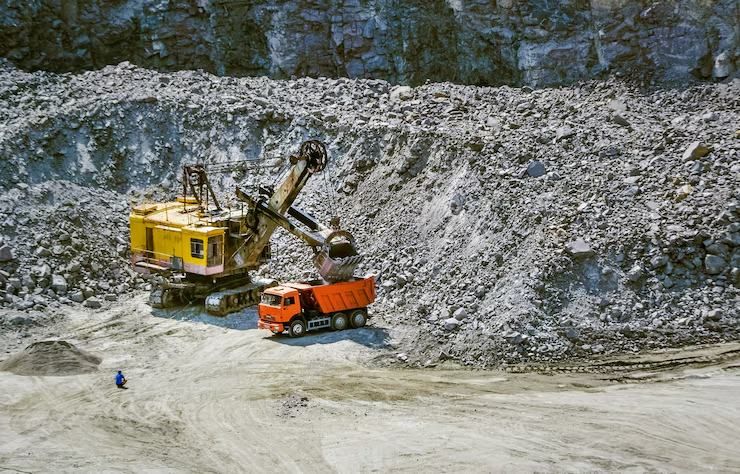
Today, mineral sizer machines are used in coal mining, iron ore processing, copper mining, gold extraction, limestone processing, and other mineral production operations. Their applications include primary, secondary, and tertiary crushing within industrial material handling systems.
Why Mineral Sizers Matter in Modern Mining Operations
Mining operations extract materials in different sizes and physical conditions. Large rocks, wet minerals, sticky clay, and abrasive ores often require size reduction before they can move to screening, grinding, washing, or mineral separation processes.
Industrial mineral sizers help manage these requirements by providing controlled crushing and consistent material flow.
Major applications include:
Coal Processing: Reducing extracted coal into manageable sizes for transportation and further processing.
Iron Ore Mining: Preparing iron ore for screening, beneficiation, and material handling.
Copper Mining: Crushing copper-bearing ores before downstream mineral processing.
Gold Mining: Reducing mined material before additional crushing and grinding.
Limestone Processing: Preparing limestone for cement production and aggregate applications.
Phosphate Mining: Reducing phosphate rock for subsequent processing operations.
Potash and Salt Processing: Handling extracted minerals in mining and industrial processing facilities.
Mineral sizers are particularly relevant where material contains clay or moisture that can create handling and blockage challenges in some conventional crushing arrangements.
Major Types of Mineral Sizer Machines
Mineral sizers are commonly classified according to their position in the crushing circuit and the size of material they process.
Primary Mineral Sizers
Primary mineral sizers receive large material directly from mining operations or an initial feeding system. They reduce large rock fragments into smaller pieces suitable for secondary crushing or conveyor transportation.
These machines generally feature large crushing teeth, heavy-duty shafts, and high-torque drive arrangements.
Secondary Mineral Sizers
Secondary mineral sizers process material that has already undergone primary crushing. Their function is to reduce particle sizes further and prepare minerals for screening, grinding, or other processing stages.
They are used in coal, limestone, iron ore, and other mineral processing facilities.
Tertiary Mineral Sizers
Tertiary sizers perform additional size reduction when a more controlled product size is required.
They are generally integrated into specialized crushing circuits where downstream processing equipment requires particular feed dimensions.
Twin-Shaft Mineral Sizers
Twin-shaft mineral sizers use two counter-rotating shafts fitted with crushing teeth or segments. The rotating shafts grip and break material as it passes through the crushing chamber.
The machine design allows controlled reduction through tooth geometry, shaft arrangement, and roll spacing.
Mineral Sizer Crushing Technologies and Working Principles
Mineral sizer technology uses a combination of mechanical forces to break materials into smaller particles.
Shearing and Tensile Crushing
Shearing occurs when opposing teeth apply mechanical forces that break material along its natural weaknesses. Tensile forces develop as material is pulled and stressed between rotating crushing components.
This approach differs from conventional compression crushing and can help control the generation of excessive fine particles in suitable applications.
Low-Speed and High-Torque Drive Systems
Mineral sizers generally operate at relatively low rotational speeds while producing substantial torque.
The drive system typically includes an electric motor, gearbox, coupling, and associated mechanical components. These components transfer rotational force to the crushing shafts.
Adjustable Crushing Teeth and Roller Gaps
Crushing teeth are designed according to the characteristics of the material being processed. Their shape, arrangement, and spacing influence material gripping and particle reduction.
Adjustable roll spacing can also influence the discharge size, depending on the machine design.
Feeding and Material Discharge Systems
Apron feeders and other controlled feeding equipment distribute material evenly across the crushing shafts.
After crushing, the reduced material moves through the discharge arrangement toward conveyors, screens, or subsequent processing equipment.
Mineral Sizer Manufacturing Processes and Main Components
Manufacturing mineral sizers involves mechanical engineering, metal fabrication, machining, component assembly, and quality inspection. Equipment specifications depend on crushing capacity, material hardness, operating conditions, and mine layout.
Heavy-Duty Frame Manufacturing
The machine frame provides structural support for the crushing shafts, drive assemblies, and other components. It is generally manufactured using fabricated steel structures designed to withstand mechanical loads and operating vibration.
Crushing Shaft and Tooth Manufacturing
Crushing shafts are manufactured using suitable alloy steels and machining processes. Replaceable crushing teeth or wear segments are designed to withstand repeated contact with abrasive mineral materials.
Heat treatment and material selection are important considerations for component durability.
Gearbox and Drive Assembly
The drive assembly transfers power from the motor to the crushing shafts. It generally includes gearboxes, couplings, bearings, and mechanical protection components.
Some designs use synchronized gear arrangements to maintain the required relationship between the rotating shafts.
Assembly and Quality Inspection
After individual components are manufactured, they are assembled and inspected.
Common inspection activities include:
Dimensional accuracy checks.
Shaft alignment inspection.
Gearbox and bearing assessment.
Crushing tooth fitting and clearance checks.
Lubrication system inspection.
Electrical and mechanical testing.
Operational testing under specified conditions.
These procedures help verify equipment performance and mechanical reliability before installation.
Global Mineral Sizer Manufacturers and Suppliers
The global mineral processing equipment industry includes specialized crushing equipment manufacturers and broader mining technology companies.
Some internationally recognized manufacturers and suppliers include:
MMD Group: Develops mineral sizers, apron feeders, material handling systems, and in-pit crushing and conveying equipment.
FLS: Manufactures ABON sizers and other mineral processing equipment for mining applications.
McLanahan Corporation: Develops primary and secondary mineral sizers for coal, hard rock, and industrial minerals.
Metso: Supplies crushing and mineral processing technologies for mining operations.
TAKRAF Group: Develops mining systems, material handling equipment, and crushing technologies.
Komatsu: Manufactures mining equipment and material reduction systems.
Henan Excellent Machinery: Develops twin-shaft mineral sizers and other crushing and screening equipment.
Mineral sizer manufacturers and suppliers differ in their equipment configurations, processing capacities, tooth designs, maintenance arrangements, and material compatibility.
Mineral Sizer Selection and Technical Evaluation Factors
Selecting an industrial mineral sizer requires an understanding of the material being processed and the operating conditions of the mining facility.
Important evaluation factors include:
Evaluation Factor | Technical Consideration |
|---|---|
Feed Size | Maximum dimensions of incoming material |
Discharge Size | Required particle size after crushing |
Processing Capacity | Material throughput per hour |
Material Hardness | Resistance of the mineral to crushing |
Moisture Content | Presence of water or sticky clay |
Crushing Teeth | Tooth geometry and wear resistance |
Drive System | Motor power, gearbox, and torque |
Maintenance Access | Ease of inspection and component replacement |
Installation Layout | Available space and equipment integration |
Safety Features | Guards, emergency stops, and protection systems |
Engineers also evaluate the relationship between mineral sizers, feeders, conveyors, screens, and downstream processing machinery.
Mineral Sizer Industry Developments and Technologies, 2024–2026
Mineral crushing technology continues to develop through improvements in mechanical design, material engineering, automation, and digital monitoring.
Important developments include:
Hard-Rock Crushing Applications: Equipment designs are being adapted to process a broader range of minerals, including iron ore, copper ore, nickel, and lithium-bearing materials.
Improved Wear Components: Manufacturers are developing replaceable crushing segments, specialized tooth profiles, and wear-resistant materials to address abrasive operating conditions.
Digital Monitoring: Sensors and monitoring systems can help operators observe machine temperature, vibration, motor load, and other operating parameters.
Automation Integration: Mineral sizers are increasingly integrated with automated feeders, conveyor controls, and centralized plant monitoring systems.
Energy-Efficient Crushing: Low-speed, high-torque drive arrangements and controlled material reduction are important areas of equipment engineering.
Modular Equipment Design: Maintenance access, replaceable components, and adaptable installation arrangements are receiving attention in mining equipment development.
These developments reflect the broader movement toward automated mineral processing and digitally monitored mining operations.
Mining Machinery Regulations and Safety Standards in India
Mineral sizers used in Indian mining operations must meet applicable mining safety, machinery, electrical, and operational requirements.
The Directorate General of Mines Safety (DGMS), under the Ministry of Labour and Employment, oversees mine safety and administers relevant mining regulations. The regulatory framework includes applicable coal, metalliferous, and oil mining safety provisions.
Important compliance considerations include:
Machinery Approval: Certain mining equipment and materials require applicable DGMS approval.
Machine Guarding: Rotating shafts, gears, couplings, and other hazardous components require appropriate protection.
Electrical Safety: Motors, electrical panels, and control systems must meet relevant electrical safety requirements.
Operating Procedures: Mines must establish appropriate operating and maintenance procedures.
Operator Training: Personnel must receive relevant safety training and understand machine operating conditions.
Equipment Inspection: Mechanical components and safety systems require appropriate examination and maintenance.
The applicability of specific approvals and standards depends on the machine category, mine type, installation, and current regulations.
Mineral Processing Tools and Technical Resources
Mining engineers and plant operators use different technical resources to understand crushing performance, equipment specifications, and material characteristics.
Examples include:
Metso Bruno Simulation Software: For analyzing and simulating crushing and screening plant configurations.
Autodesk Inventor: For mechanical equipment design and engineering.
SOLIDWORKS: For 3D machine modeling and mechanical design.
Microsoft Excel: For production calculations, equipment monitoring, and operational data analysis.
ASTM Standards: For technical information concerning materials, testing, and industrial engineering.
ISO Standards: For machinery safety, quality management, and engineering requirements.
These resources support equipment design, crushing circuit planning, maintenance documentation, and manufacturing activities.
Frequently Asked Questions About Mineral Sizers
1. What is a mineral sizer crusher used for?
A mineral sizer crusher reduces large rocks, ores, coal, and other bulk materials into smaller particles. It is used in primary, secondary, and tertiary crushing operations.
2. What are the main types of mineral sizer machines?
The main categories include primary mineral sizers, secondary mineral sizers, tertiary mineral sizers, and twin-shaft mineral sizers. They differ in crushing capacity, feed requirements, and processing applications.
3. How does a twin-shaft mineral sizer work?
A twin-shaft mineral sizer uses two counter-rotating shafts fitted with crushing teeth. These teeth grip, shear, and break incoming material into smaller particles.
4. Who are the global mineral sizer manufacturers?
Recognized manufacturers and suppliers include MMD Group, FLS, McLanahan Corporation, Metso, TAKRAF Group, Komatsu, and Henan Excellent Machinery.
5. What materials can industrial mineral sizers process?
Mineral sizers can process coal, iron ore, copper ore, gold ore, limestone, bauxite, phosphate, potash, nickel-bearing ores, and other mineral materials, depending on machine specifications.
Conclusion
Mineral sizers are specialized crushing machines used to reduce extracted minerals into controlled particle sizes for further processing. Primary, secondary, tertiary, and twin-shaft designs support different stages of mining and mineral processing operations. Their manufacturing involves heavy-duty fabrication, precision machining, specialized crushing teeth, and mechanical assembly. Automation, digital monitoring, and wear-resistant components continue to influence mineral sizer technology and modern mining equipment development.