Cheese processing machinery includes the equipment used to transform milk into different types of cheese through controlled coagulation, curd formation, cutting, cooking, draining, pressing, molding, salting, ripening, and packaging. Modern cheese plants may use individual machines or integrated production lines designed around the cheese variety, production capacity, milk characteristics, and desired product specifications.
From cheese vats and curd cutters to pressing systems, brining equipment, ripening rooms, and packaging machines, each stage contributes to the texture, moisture, shape, and consistency of the finished product.
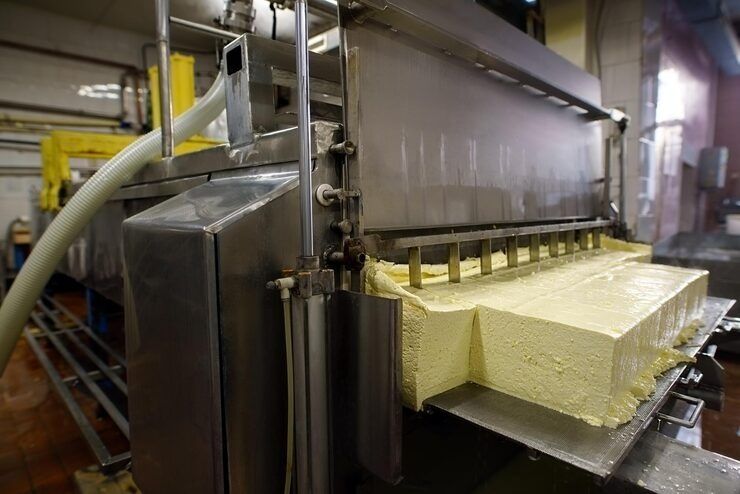
Why Cheese Processing Machinery Matters
Cheese manufacturing involves a sequence of carefully controlled biological, mechanical, and thermal processes. Equipment helps processors maintain consistent operating conditions throughout these stages.
A typical cheese production line may include:
- Milk reception and storage
- Milk standardization
- Pasteurization
- Culture addition
- Coagulation
- Curd cutting
- Curd cooking
- Whey separation
- Curd handling
- Molding
- Pressing
- Salting or brining
- Ripening
- Cutting
- Packaging
- Cold storage
The exact configuration varies considerably between soft, semi-hard, hard, fresh, processed, and specialty cheeses.
Cheese Processing Technologies
Different cheese varieties require different processing conditions. The technology selected affects moisture, texture, flavor development, shape, and maturation characteristics.
Milk Preparation and Pasteurization
Milk is typically received, tested, stored, and prepared before cheese production. Depending on the cheese type and production process, milk may undergo pasteurization or other controlled treatments.
Milk-processing systems can include storage tanks, pumps, heat exchangers, separators, standardization equipment, and pasteurization systems.
Coagulation
Coagulation converts milk into a gel structure through the action of rennet, cultures, acidification, or combinations of these methods.
Cheese vats provide a controlled environment for temperature management, culture addition, coagulation, and curd development.
Curd Cutting
Once the milk has formed an appropriate curd, cutting equipment divides it into smaller particles.
The size of the curd pieces influences moisture release and therefore contributes to the characteristics of the finished cheese. Different cheese varieties require different cutting patterns and curd sizes.
Curd Cooking
Some cheese varieties require the curd to be heated while being gently agitated.
Cooking promotes whey expulsion and changes the moisture and texture of the curd. Cheese vats can incorporate heating systems and agitators designed around the processing requirements.
Whey Separation
After curd formation and cooking, whey must be separated from the curd.
Depending on the production method, separation can involve draining systems, screens, conveyors, whey collection equipment, or specialized curd-handling systems.
Molding and Pressing
The separated curd is placed into molds to create the required shape.
Pressing removes additional whey and helps form a cohesive cheese structure. Pressure, duration, mold geometry, and temperature depend on the cheese variety.
Salting and Brining
Salt can be incorporated into cheese through dry salting or immersion in a brine solution.
Brining systems require controlled salt concentration, temperature, circulation, and hygiene management.
Ripening and Maturation
Many cheeses require controlled maturation to develop their characteristic texture and flavor.
Ripening rooms can regulate:
- Temperature
- Relative humidity
- Air circulation
- Maturation duration
- Surface conditions
Different cheese varieties require different ripening environments.
Major Types of Cheese Processing Machinery
| Machinery Type | Main Function | Typical Application |
|---|---|---|
| Cheese Vat | Controls coagulation and curd processing | Multiple cheese varieties |
| Curd Cutter | Cuts formed curd | Hard and semi-hard cheese |
| Curd Stirrer | Agitates curd and whey | Curd processing |
| Curd Cooking System | Controls heating during curd processing | Selected cheese varieties |
| Whey Separator | Separates whey from curd | Cheese production lines |
| Curd Handling System | Transfers and distributes curd | Industrial cheese plants |
| Cheese Molder | Forms curd into specific shapes | Block, wheel, and specialty cheese |
| Cheese Press | Applies pressure to formed curd | Pressed cheese |
| Brining System | Applies salt through brine | Various cheese types |
| Ripening Room System | Controls maturation conditions | Aged cheese |
| Cheese Cutter | Cuts finished cheese | Blocks, slices, portions |
| Packaging Machine | Packages finished cheese | Retail and foodservice products |
Cheese Processing Manufacturing Process
A generalized cheese manufacturing sequence can be represented as:
Milk Reception → Storage → Standardization → Pasteurization → Culture Addition → Coagulation → Curd Cutting → Curd Cooking → Whey Separation → Curd Handling → Molding → Pressing → Salting/Brining → Ripening → Cutting → Packaging → Cold Storage
Not every cheese follows this exact sequence. Fresh cheese may have limited or no maturation, while aged varieties can require extended ripening under carefully controlled conditions.
Cheese Processing Equipment for Different Cheese Types
Fresh Cheese
Fresh cheeses generally require fewer maturation stages. Equipment may include milk preparation systems, cheese vats, curd handling equipment, draining systems, molding equipment, and packaging machines.
Soft Cheese
Soft cheese production can involve controlled coagulation, gentle curd handling, draining, molding, salting, and maturation.
Because soft curds can be delicate, equipment must be selected to minimize unnecessary mechanical damage.
Semi-Hard Cheese
Semi-hard cheese production commonly involves curd cutting, cooking, whey drainage, molding, pressing, salting, and controlled maturation.
Hard Cheese
Hard cheese generally requires greater whey removal and controlled curd cooking. Cutting, stirring, pressing, salting, and extended maturation can form part of the production process.
Processed Cheese
Processed cheese production differs from traditional natural cheese production. Natural cheeses and other dairy ingredients may be blended, heated, emulsified, and formed into the required packaging format.
Automation and Process Control
Modern cheese-processing plants can use automation to monitor and control important production variables.
Sensors and control systems may monitor:
- Milk temperature
- Curd temperature
- pH
- Processing time
- Agitation speed
- Filling levels
- Brine concentration
- Ripening conditions
- Production throughput
- Equipment status
Automated controls can coordinate valves, pumps, agitators, cutting systems, heating systems, conveyors, and packaging equipment.
Automation can also support recipe management and production data collection where required.
Hygienic Design and Cleaning
Cheese-processing equipment operates in a food-production environment where hygienic design is essential.
Equipment should provide appropriate cleanability and minimize areas where milk or curd residues can accumulate.
Important considerations include:
- Food-compatible construction materials
- Smooth product-contact surfaces
- Hygienic piping
- Appropriate drainage
- Accessible inspection points
- Hygienic valves and fittings
- Cleaning-in-place compatibility
- Controlled sanitation procedures
Cleaning requirements vary according to the equipment, product, production environment, and applicable food-safety practices.
Global Cheese Processing Machinery Manufacturers and Suppliers
The global dairy-processing equipment market includes companies providing individual cheese machines, complete processing lines, automation systems, and integrated dairy technologies.
GEA provides dairy-processing technologies covering milk treatment, separation, processing, hygiene, automation, and related food-processing equipment.
Tetra Pak provides dairy processing and packaging technologies, including systems used in milk and cheese-related processing environments.
Alfa Laval supplies heat-transfer, separation, hygienic fluid handling, and dairy-processing technologies.
SPX FLOW provides process equipment and technologies for food and dairy applications, including fluid handling, mixing, separation, and processing systems.
Specialized cheese equipment manufacturers also produce cheese vats, curd cutters, pressing systems, molding machines, brining systems, ripening equipment, cutting machinery, and packaging lines.
Supplier selection depends on cheese type, processing capacity, automation requirements, hygiene specifications, regional standards, and the desired production-line configuration.
How to Select Cheese Processing Machinery
1. Define the Cheese Variety
Start by identifying whether the plant will produce fresh, soft, semi-hard, hard, processed, or specialty cheese.
2. Determine Milk Characteristics
Milk composition, solids content, fat level, protein characteristics, acidity, and processing conditions can influence equipment requirements.
3. Establish Production Capacity
Determine the required milk-processing volume and finished cheese output. This influences vat dimensions, curd-handling capacity, pressing systems, and packaging throughput.
4. Review Processing Requirements
Identify coagulation, curd cutting, cooking, draining, molding, pressing, salting, and ripening requirements.
5. Evaluate Automation
Determine which stages should be manually controlled and which can benefit from automated valves, sensors, controls, conveyors, and recipe management.
6. Consider Hygiene and Cleaning
Evaluate food-contact materials, cleanability, CIP requirements, drainage, and sanitation procedures.
7. Plan the Complete Production Line
Individual machines should be compatible with upstream and downstream processes. Equipment capacity, transfer rates, storage, packaging, and refrigeration should be considered together.
Cheese Processing Machinery Cost and Pricing Factors
The cheese processing machinery cost depends on equipment capacity, automation, construction materials, cheese variety, process complexity, packaging requirements, and the number of integrated stages.
Important pricing factors can include:
- Cheese vat capacity
- Curd-cutting system
- Heating and cooling systems
- Whey separation equipment
- Molding and pressing systems
- Brining equipment
- Ripening infrastructure
- Cutting and portioning systems
- Packaging machinery
- Automation and controls
- CIP integration
- Installation and commissioning
A small cheese-processing machine and a complete automated cheese production line represent very different equipment configurations.
When comparing equipment costs, it is useful to evaluate the complete process rather than considering one machine independently.
Industrial Applications
Cheese processing machinery is used across several dairy and food-production applications, including:
- Natural cheese production
- Fresh cheese production
- Soft cheese manufacturing
- Semi-hard cheese production
- Hard cheese manufacturing
- Processed cheese production
- Cheese slices
- Cheese blocks
- Cheese portions
- Foodservice cheese products
- Specialty cheese production
Equipment can be configured for small-batch production, medium-scale facilities, or large industrial plants.
Best Practices for Cheese Processing Machinery
Reliable cheese production requires appropriate operation, maintenance, and sanitation practices.
- Maintain consistent processing temperatures.
- Monitor pH and other critical process parameters.
- Inspect cutting and stirring equipment regularly.
- Maintain hygienic product-contact surfaces.
- Monitor brine conditions where applicable.
- Control ripening-room temperature and humidity.
- Inspect pumps, valves, sensors, and conveyors.
- Follow established cleaning and sanitation procedures.
- Verify equipment calibration periodically.
- Maintain records for production and equipment inspection.
Frequently Asked Questions
What is cheese processing machinery?
Cheese processing machinery consists of equipment used to transform milk into cheese through processes such as coagulation, curd cutting, cooking, whey separation, molding, pressing, salting, ripening, cutting, and packaging.
What machines are used to make cheese?
Common equipment includes cheese vats, curd cutters, agitators, whey separation systems, curd handling equipment, cheese molds, presses, brining systems, ripening rooms, cutters, and packaging machines.
What is a cheese processing line?
A cheese processing line is an interconnected group of machines that carries out multiple stages of cheese production, from milk preparation through curd processing, forming, maturation, and packaging.
What equipment is used for hard cheese?
Hard cheese production can use cheese vats, curd cutters, curd cooking systems, whey separation equipment, molding and pressing systems, brining equipment, ripening rooms, and cutting and packaging machinery.
How do I choose cheese processing machinery?
Start with the cheese variety, milk characteristics, production capacity, processing stages, hygiene requirements, automation level, and packaging format. Equipment should then be selected as an integrated production system.
Conclusion
Cheese processing machinery provides the mechanical and process-control foundation for modern cheese manufacturing. From milk preparation and coagulation to curd cutting, cooking, whey separation, pressing, salting, ripening, cutting, and packaging, each stage requires equipment suited to the characteristics of the cheese being produced.
The appropriate machinery depends on cheese variety, production volume, milk composition, processing technology, hygiene requirements, automation, and packaging needs. Evaluating the entire production line can help manufacturers create a coordinated system for consistent and controlled cheese processing.