Solar panels are photovoltaic devices that convert sunlight into electricity. They are used in residential buildings, commercial facilities, industrial plants, utility-scale power projects, remote installations, and other energy systems.
Modern solar panel technology includes several photovoltaic cell designs, module configurations, manufacturing processes, mounting structures, electrical components, monitoring systems, and energy-storage integrations. Choosing a suitable system depends on available space, solar conditions, electricity requirements, installation configuration, environmental conditions, and applicable regulations.
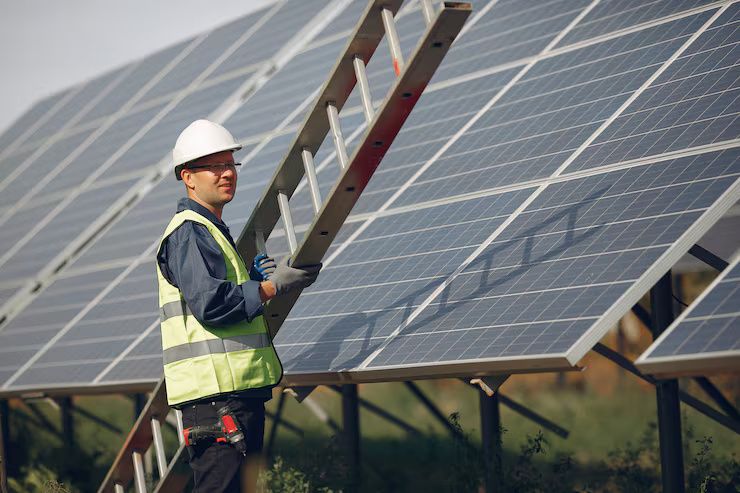
Context
What Are Solar Panels?
Solar panels, also called photovoltaic modules, contain interconnected solar cells that convert sunlight into direct-current electricity through the photovoltaic effect.
A typical module contains solar cells, encapsulation materials, a protective front layer, a backsheet or rear structure, electrical connections, and a frame or mounting interface.
Multiple panels can be connected to create a photovoltaic array. The array is then connected to inverters and other electrical equipment to form a complete solar power system.
How Solar Panels Work
When sunlight reaches a photovoltaic cell, photons transfer energy to semiconductor materials inside the cell. This creates an electrical current that can be collected through conductive contacts.
The electricity generated by the panels is normally direct current (DC). An inverter can convert this DC electricity into alternating current (AC) for compatible electrical loads or grid connection.
Major Solar Panel Types
Different photovoltaic technologies have different characteristics.
| Solar Technology | Main Characteristic | Typical Applications |
|---|---|---|
| Monocrystalline Silicon | High-purity silicon cells | Residential and commercial systems |
| Polycrystalline Silicon | Multiple silicon crystal structure | Conventional photovoltaic installations |
| Thin-Film | Semiconductor layers on substrates | Specialized and large-area systems |
| TOPCon | Advanced silicon-cell architecture | Modern high-efficiency modules |
| Heterojunction | Combined semiconductor structures | High-performance applications |
| Bifacial | Generates power from front and rear sides | Ground-mounted and reflective sites |
| Flexible PV | Lightweight adaptable construction | Curved and portable applications |
Actual performance depends on module design, installation conditions, temperature, shading, orientation, and other environmental factors.
Monocrystalline Solar Panels
Monocrystalline panels use cells manufactured from single-crystal silicon structures. They are widely used in residential, commercial, and utility-scale photovoltaic installations.
Their appearance, dimensions, electrical ratings, and cell architecture vary among manufacturers.
Polycrystalline Solar Panels
Polycrystalline panels use silicon produced from multiple crystal structures. They have historically been used in a wide range of photovoltaic installations.
Manufacturing technologies continue to evolve, so the relative characteristics of different panel technologies can change over time.
Thin-Film Solar Panels
Thin-film photovoltaic modules use semiconductor layers deposited onto substrates such as glass, metal, or flexible materials.
They can be useful for applications where module weight, form factor, or specific environmental characteristics are important.
Bifacial Solar Panels
Bifacial modules can generate electricity from sunlight reaching both sides of the module. Their output depends partly on the reflectivity of the surrounding surface, module elevation, installation geometry, and environmental conditions.
They are frequently considered for ground-mounted photovoltaic systems.
Importance
Why Solar Panels Matter
Solar photovoltaic systems generate electricity directly from sunlight without requiring combustion during operation. They can be installed at different scales, from small rooftop arrays to large utility-scale projects.
Their modular structure allows systems to be configured according to available area and electrical requirements.
Residential Solar Systems
Residential systems are commonly installed on rooftops or other suitable areas around homes.
A typical residential configuration may include:
- Solar panels
- Inverter
- Mounting structure
- DC and AC protection equipment
- Electrical wiring
- Monitoring equipment
- Optional battery storage
The system design depends on roof characteristics, electricity consumption, local solar conditions, and grid requirements.
Commercial and Industrial Systems
Commercial and industrial buildings can use rooftop or ground-mounted photovoltaic systems.
Large facilities may have substantial roof areas or adjacent land suitable for solar installations. Electrical design must account for building loads, distribution equipment, protection systems, and grid-interconnection requirements.
Utility-Scale Solar Plants
Utility-scale photovoltaic plants use large arrays of solar modules connected to centralized or distributed inverter systems.
These projects may include tracking systems, transformers, switchgear, monitoring platforms, weather stations, and grid-interconnection equipment.
Solar and Energy Storage
Solar panels can be combined with battery energy-storage systems. During periods of solar generation, electricity can be directed toward loads, the grid, or battery charging depending on system configuration.
Storage can provide additional flexibility for managing electricity availability, but system sizing depends on the intended operating strategy.
Solar Panel Manufacturing Processes
Silicon Production
Conventional crystalline-silicon photovoltaic manufacturing begins with silicon feedstock that is processed into high-purity material suitable for solar-cell production.
The silicon is then formed into ingots or other structures before being processed into wafers.
Wafer Production
Silicon ingots are sliced into thin wafers. These wafers form the semiconductor foundation of many photovoltaic cells.
Wafer thickness, surface treatment, material quality, and manufacturing precision influence the resulting cell characteristics.
Solar Cell Manufacturing
Solar cells undergo multiple processing stages to create the electrical structures needed for photovoltaic conversion.
Depending on the technology, processes may include surface texturing, doping, passivation, deposition, metallization, and other treatments.
Module Assembly
Individual solar cells are interconnected to form a module. The cell network is encapsulated between protective layers before lamination.
The completed module can then receive a frame, junction box, cables, connectors, and other components.
Testing and Inspection
Manufacturers conduct electrical and physical testing to evaluate module characteristics.
Testing may include measurements of electrical output, insulation characteristics, visual appearance, mechanical properties, and other defined parameters.
Solar Systems and Components
Inverters
Inverters convert the DC electricity generated by photovoltaic modules into AC electricity.
Common configurations include string inverters, central inverters, microinverters, and hybrid inverter systems.
Mounting Structures
Mounting structures hold photovoltaic modules at defined orientations and angles.
Roof-mounted systems can use different attachment configurations, while ground-mounted systems may use fixed structures or tracking mechanisms.
Solar Trackers
Tracking systems move photovoltaic modules to follow the apparent movement of the sun.
Single-axis and dual-axis tracking configurations are used in selected installations. Tracker selection depends on land characteristics, project design, energy objectives, and environmental conditions.
Monitoring Systems
Solar monitoring platforms collect information about energy generation, inverter status, system performance, and selected environmental conditions.
Monitoring can help operators identify abnormal operating conditions and evaluate historical production.
Battery Storage
Battery systems can store electricity generated by photovoltaic installations. A complete storage system may include battery modules, battery-management systems, inverters, thermal management, protection equipment, and monitoring controls.
Manufacturers and Suppliers
The solar-panel manufacturing ecosystem includes companies producing photovoltaic cells, modules, inverters, mounting systems, trackers, batteries, monitoring platforms, and electrical equipment.
When evaluating manufacturers or suppliers, organizations can examine:
- Cell technology
- Module electrical ratings
- Physical dimensions
- Temperature characteristics
- Mechanical-load specifications
- Environmental protection
- Warranty documentation
- Product certifications
- Manufacturing quality controls
- System compatibility
- Technical documentation
Supplier selection should consider the complete photovoltaic system rather than evaluating the module independently from the inverter, mounting structure, electrical equipment, and installation environment.
Industrial and Commercial Applications
Rooftop Solar
Rooftop photovoltaic systems can use available building surfaces to generate electricity near the point of consumption.
Commercial warehouses, factories, offices, educational buildings, and other facilities may use rooftop arrays where structural and electrical conditions permit.
Solar Farms
Large photovoltaic installations use extensive arrays of modules arranged across ground-mounted structures.
These facilities can incorporate trackers, inverter stations, transformers, monitoring equipment, and grid-interconnection systems.
Agriculture
Solar installations can be integrated with agricultural land in selected configurations. Agrivoltaic systems combine photovoltaic generation with agricultural activities under or around elevated solar structures.
The suitability of such systems depends on crop requirements, land conditions, solar design, and local policies.
Remote Power Systems
Solar panels can provide electricity in remote locations where conventional grid connections are unavailable or difficult to establish.
These systems may incorporate batteries, charge controllers, backup generators, and specialized electrical equipment.
Transportation Infrastructure
Photovoltaic systems can be used around parking facilities, transportation buildings, lighting systems, and selected infrastructure.
Solar canopies are one example of a structure that combines vehicle-covered areas with photovoltaic generation.
Recent Updates
Advanced Silicon Cell Technologies
Photovoltaic manufacturing continues to develop through cell architectures such as TOPCon, heterojunction, and other advanced designs.
These technologies modify how semiconductor layers, contacts, and passivation structures are arranged within the cell.
Higher-Power Modules
Module designs have continued to increase electrical output through larger wafer formats, improved cell designs, higher cell counts, and other engineering changes.
Module dimensions and electrical characteristics should be evaluated alongside mounting and inverter compatibility.
Bifacial Technology
Bifacial modules continue to be used in selected commercial and utility-scale installations. Their energy production depends strongly on installation geometry and the amount of useful light reaching the rear surface.
Solar Manufacturing Automation
Modern factories use automated cell processing, module assembly, optical inspection, electrical testing, and material-handling systems.
Automation can improve manufacturing consistency and provide detailed production data.
Digital Monitoring
Modern photovoltaic plants can integrate sensors, inverter data, weather measurements, and monitoring platforms.
Analytics systems can compare expected and actual production and help identify equipment conditions that require investigation.
Recycling and Circular Manufacturing
The growing volume of photovoltaic equipment has increased attention toward material recovery and recycling.
Glass, aluminum, silicon, polymers, and other components can potentially enter different recovery pathways depending on module construction and available recycling processes.
Laws or Policies
Electrical Requirements
Solar photovoltaic installations must comply with applicable electrical codes and installation requirements.
These can address wiring, grounding, protection, disconnects, inverter installation, grid connection, and other electrical considerations.
Grid Interconnection
Grid-connected solar systems generally require approval or technical coordination with the relevant electricity provider or grid authority.
Interconnection requirements can address inverter characteristics, protection systems, metering, power quality, and system capacity.
Building Requirements
Rooftop solar installations may need to comply with structural and building requirements.
Roof loading, wind exposure, attachment methods, fire considerations, and access pathways can influence system design.
Environmental Considerations
Large solar projects may be subject to land-use, environmental, waste-management, and permitting requirements.
Requirements vary according to project scale, location, land characteristics, and local regulations.
Product Standards
Photovoltaic modules, inverters, batteries, and electrical equipment may need to meet applicable testing and certification standards.
Organizations should verify the standards relevant to the equipment and installation jurisdiction.
Tools and Resources
Solar Irradiance Assessment
Solar-resource assessment tools can estimate available sunlight and help evaluate potential photovoltaic generation.
PV Design Software
Photovoltaic design platforms can model module layouts, electrical configurations, shading, energy production, inverter selection, and system performance.
Performance Monitoring
Monitoring platforms can track generation, inverter operation, system alarms, and historical production.
Thermal Inspection
Thermal imaging can help identify selected abnormal temperature patterns in photovoltaic modules, electrical connections, and other components.
Electrical Testing
Electrical measurement equipment can evaluate voltage, current, insulation, continuity, and other characteristics during commissioning and maintenance.
FAQs
What are solar panels?
Solar panels are photovoltaic modules containing solar cells that convert sunlight into electrical energy. Multiple panels can be connected to form a larger photovoltaic array.
What are the main types of solar panels?
Common technologies include monocrystalline silicon, polycrystalline silicon, thin-film, TOPCon, heterojunction, bifacial, and flexible photovoltaic modules.
How are solar panels manufactured?
Crystalline-silicon panels generally involve silicon processing, ingot production, wafer slicing, solar-cell fabrication, cell interconnection, module assembly, lamination, and testing.
What components are included in a solar power system?
A photovoltaic system can include solar panels, inverters, mounting structures, electrical protection equipment, wiring, monitoring systems, and optional battery storage.
What should be considered when evaluating solar panel manufacturers?
Important factors include cell technology, module specifications, electrical ratings, environmental characteristics, certifications, documentation, system compatibility, and project requirements.
Conclusion
Solar panels convert sunlight into electricity through photovoltaic cells and can be deployed in residential, commercial, industrial, agricultural, remote, and utility-scale applications. Different technologies, including crystalline silicon, thin-film, TOPCon, heterojunction, bifacial, and flexible modules, provide different characteristics for different system configurations.
The broader solar ecosystem includes cell and module manufacturing, inverters, mounting systems, trackers, batteries, monitoring platforms, and automated production equipment. Developments in advanced cell architectures, higher-output modules, digital monitoring, manufacturing automation, and material recovery continue to shape photovoltaic technology.